Navigating the Definition of a Term Newborn
The arrival of a newborn marks the culmination of a complex biological journey. In the medical community, the label term signifies a specific window of developmental readiness. Historically, any birth occurring between 37 and 42 weeks was simply categorized as "at term." However, modern clinical data from indicates that the final weeks of gestation involve critical nuances in brain and lung development. This evolution in terminology helps healthcare providers in the United States and globally tailor care to the specific risks associated with different birth weeks.
Defining the Term Categories: The New Spectrum
In 2013, a joint statement from the American College of Obstetricians and Gynecologists (ACOG) and the Society for Maternal-Fetal Medicine (SMFM) redefined "term." They replaced the broad label with four distinct sub-categories. This change acknowledges that infants born at 37 weeks often face different health challenges than those born at 40 weeks.
37 0/7 weeks through 38 6/7 weeks. While considered term, these infants may still require assistance with breathing or temperature regulation.
39 0/7 weeks through 40 6/7 weeks. This window represents the optimal timing for birth, showing the best long-term developmental outcomes.
41 0/7 weeks through 41 6/7 weeks. Monitoring increases during this stage to ensure placental health remains sufficient.
42 0/7 weeks and beyond. These births carry increased risks of complications related to placental degradation and infant size.
Obstetricians use this method to estimate the 40-week due date:
First Day of Last Menstrual Period + 7 Days - 3 Months + 1 YearNote: This assumes a regular 28-day cycle. Ultrasound remains the gold standard for accuracy in the first trimester.
Physical Markers of Maturity
A term newborn displays specific anatomical features that differentiate them from preterm or postterm infants. These markers help neonatologists confirm gestational age when prenatal dating is uncertain.
A full-term infant typically has pink, smooth skin with minimal vernix caseosa (the waxy white coating). In early-term babies, vernix may still be thick in the skin folds, while postterm babies may have peeling, parchment-like skin due to the loss of this protective layer in utero.
At term, the ear cartilage is firm and the ear recoils immediately when folded. On the soles of the feet, creases should cover at least the top two-thirds of the foot. In preterm infants, the feet may be smooth, and the ears may remain folded.
In term males, the testes are usually descended into the scrotum, which displays prominent rugae (wrinkles). In term females, the labia majora completely cover the labia minora and clitoris.
Physiological Transitions at Term
The transition from placental support to independent breathing is a monumental physiological event. A term infant possesses a sufficient amount of pulmonary surfactant, a substance that prevents the air sacs in the lungs from collapsing. This is one of the primary differences between an early-term and a full-term infant; while early-term lungs are "ready," full-term lungs are "optimized."
The Cardiovascular Shift
In the womb, fetal circulation bypasses the lungs via the ductus arteriosus. Within seconds of the first breath, the pressure in the heart shifts, and this shunt begins to close. Term infants usually manage this pressure change seamlessly, whereas preterm infants may struggle with a patent ductus arteriosus (PDA).
Newborn Health Assessments
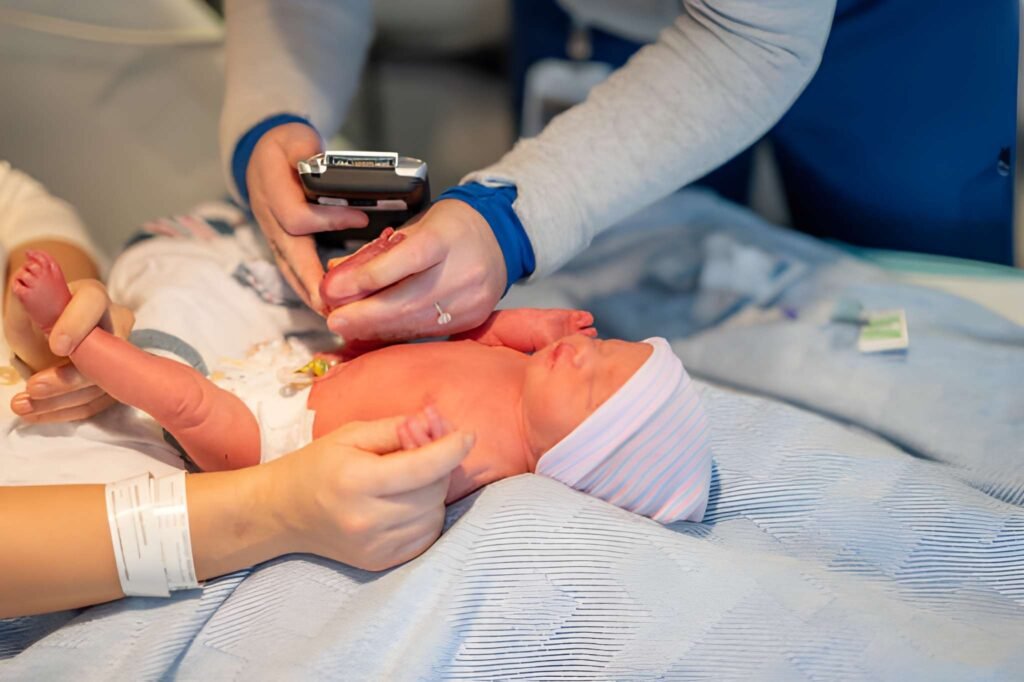
Immediately following birth, several standardized tests ensure the term newborn is transitioning safely. The most famous of these is the Apgar Score, conducted at one and five minutes after delivery.
| Component | 0 Points | 1 Point | 2 Points |
|---|---|---|---|
| Activity | Absent | Flexed arms/legs | Active movement |
| Pulse | Absent | Below 100 bpm | Over 100 bpm |
| Grimace | Floppy | Minimal response | Prompt response |
| Appearance | Blue/Pale | Body pink, limbs blue | All pink |
| Respiration | Absent | Slow/Irregular | Vigorous cry |
Challenges Across the Term Spectrum
While term babies are generally healthy, each sub-category carries specific risks. For example, early-term infants (37-38 weeks) are statistically more likely to be admitted to the Neonatal Intensive Care Unit (NICU) for respiratory distress or hypoglycemia than full-term infants.
- Difficulty with breastfeeding latch
- Hyperbilirubinemia (Jaundice)
- Temperature instability
- Meconium aspiration syndrome
- Macrosomia (high birth weight)
- Placental insufficiency
US Socioeconomic Context and Term Births
In the United States, the rates of early-term births have historically been influenced by elective inductions and scheduled Cesarean sections. Recognizing the risks associated with delivering before 39 weeks, the "March of Dimes" and other health organizations launched nationwide campaigns to eliminate elective deliveries before 39 0/7 weeks.
Socioeconomic disparities significantly impact the likelihood of reaching a full-term pregnancy. Access to early prenatal care, nutritional security, and the mitigation of maternal stress are critical factors. In many US states, community-based doula programs and expanded Medicaid coverage for postpartum care aim to improve the health of both the mother and the term newborn, ensuring a safe start to life regardless of economic background.
Final Specialist Recommendations
For expectant parents, the goal is often "reaching the finish line." However, it is important to remember that 40 weeks is an average, not an expiration date. Trusting the biological process while maintaining close communication with your obstetric team ensures that the transition to parenthood is as smooth as possible. If your baby arrives in the early-term window, they may require a bit more patience with feeding and warmth, but they are developmentally equipped for success.