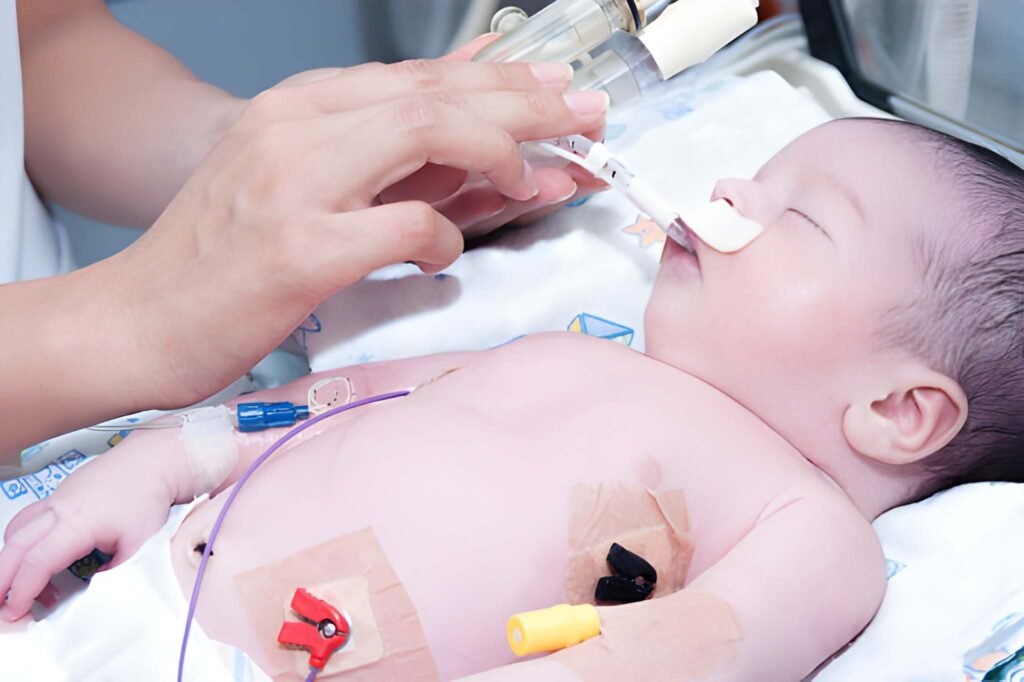
The transition from the fluid-filled environment of the womb to the oxygen-rich air of the delivery room remains the most precarious journey a human will ever undertake. Within seconds of birth, a newborn must clear pulmonary fluid, expand their alveoli, and initiate a regular rhythm of gas exchange. For the majority of infants, this process occurs spontaneously through the pressure of the birth canal and the stimulus of cold air. However, when a newborn demonstrates respiratory distress, the immediate clinical response often involves airway clearance. While routine bulb suctioning was once a universal standard in neonatal nurseries, modern evidence-based practices emphasize a more discerning and cautious approach to protect the delicate neonatal physiology.
The Physiological Shift to Air Breathing
During fetal development, the lungs do not perform gas exchange. Instead, they produce a specialized fluid that maintains alveolar volume and promotes growth. The placenta handles oxygenation and waste removal. As labor begins, the mother's body releases catecholamines that signal the fetal lungs to stop producing fluid and begin absorbing it. The physical compression of the chest during a vaginal delivery—often termed the "vaginal squeeze"—expels approximately one-third of the remaining fluid through the mouth and nose.
The infant's first cry serves as a powerful diagnostic marker. It indicates that the newborn has generated sufficient negative pressure to overcome the surface tension within the lungs. This expansion triggers the release of surfactant, a phospholipid that prevents the alveoli from collapsing during expiration. When this transition falters, respiratory distress ensues. The presence of excessive mucus or meconium in the oropharynx can physically block the airway, making the role of suctioning a critical, though often overused, intervention.
Identifying Signs of Respiratory Distress
Clinical vigilance in the newborn nursery requires an acute understanding of the compensatory mechanisms infants use when oxygenation is compromised. Because newborns possess highly compliant chest walls and small airways, their signs of distress are often visible before they become systemic. Identifying these markers early prevents the progression to respiratory failure.
The Evolution of Suctioning Protocols
For decades, medical textbooks taught that every newborn required immediate bulb suctioning of the mouth and nose upon delivery of the head. This practice aimed to clear amniotic fluid and mucus to prevent aspiration. However, extensive research conducted over the last fifteen years has shifted the consensus. The Neonatal Resuscitation Program (NRP) now recommends against routine suctioning for healthy, vigorous infants, even in the presence of meconium-stained fluid.
The rationale for this shift involves the risk of bradycardia. The back of the throat is highly sensitive and contains various vagal receptors. Stimulating these receptors with a bulb syringe or a suction catheter can trigger a profound vagal response, causing the heart rate to drop suddenly. In an infant already struggling with respiratory transition, a secondary cardiac deceleration can lead to a cascade of resuscitative emergencies.
| Clinical Presentation | Intervention Priority | Suctioning Guidance |
|---|---|---|
| Vigorous Infant (Crying, good tone) | Skin-to-skin contact, drying, stimulation | Avoid routine suctioning; wipe mouth/nose with cloth |
| Non-Vigorous Infant (Limp, poor effort) | Initial stabilization under radiant warmer | Suction only if airway appears obstructed |
| Meconium-Stained Fluid | Standard NRP algorithm | No longer requires routine intubation or suctioning |
| Obvious Obstruction (Gurgling, bubbling) | Airway clearance | Perform gentle bulb suctioning (Mouth then Nose) |
Correct Bulb Suctioning Technique
When suctioning becomes clinically necessary—such as when an infant is "wet" with secretions or demonstrates gurgling that interferes with breathing—technique is paramount. Improper use of a bulb syringe can cause trauma to the delicate mucosal linings of the mouth and nose, leading to swelling that further narrows the infant's already small airway.
The "Mouth Before Nose" Rule
Clinicians must always suction the mouth before the nose. The mnemonic "M before N" (alphabetical order) helps staff remember this sequence. Infants are obligate nose breathers. If you suction the nose first, the infant may take a reflexive gasp, potentially inhaling any secretions present in the oropharynx into their lungs. Suctioning the mouth first ensures that the "well" of fluid is empty before the nasal reflex is triggered.
Risks and Clinical Complications
While bulb suctioning appears to be a simple task, it carries significant physiological consequences for the newborn. Beyond the vagal response mentioned previously, aggressive suctioning can cause atmospheric air to enter the stomach if the bulb is squeezed while inside the mouth, leading to gastric distention. This distention pushes up against the diaphragm, making it even harder for the infant to expand their lungs.
Furthermore, the nasal passages of a newborn are extremely narrow and vascular. Even a small amount of trauma from the tip of a bulb syringe can cause edema or minor bleeding. Because newborns cannot easily switch to mouth breathing, this nasal swelling can lead to persistent respiratory distress that persists long after the initial secretions have cleared. In most nurseries, wiping the face with a dry towel provides sufficient stimulation and clearance without the risks associated with mechanical suction.
Apgar Scoring and Resuscitation
The Apgar score provides a standardized method for evaluating an infant's transition at one and five minutes after birth. While it does not dictate the need for resuscitation, it reflects the infant's overall physiological status. For an infant in respiratory distress, the Apgar score serves as a benchmark for the effectiveness of our interventions.
1. Heart Rate: Absent (0), under 100 (1), over 100 (2).
2. Respiratory Effort: Absent (0), slow/irregular (1), good cry (2).
3. Muscle Tone: Flaccid (0), some flexion (1), active motion (2).
4. Reflex Irritability: No response (0), grimace (1), cough/sneeze/cry (2).
5. Color: Blue/pale (0), body pink/extremities blue (1), completely pink (2).
Scenario: An infant has a heart rate of 110 (2), slow breathing (1), some flexion (1), grimace (1), and blue extremities (1).
Total Score: 2 + 1 + 1 + 1 + 1 = 6 out of 10.
A score of 7 or above indicates a stable transition. A score of 6 or below suggests the need for supportive care, such as supplemental oxygen or further airway clearance.
Management of Meconium Aspiration
The presence of meconium—the infant's first stool—in the amniotic fluid used to be an automatic trigger for aggressive suctioning. Previous protocols required the obstetrician to suction the head on the perineum and the pediatrician to intubate the infant to suction the trachea before the first breath. Recent clinical trials have proven that this does not improve outcomes and may cause harm. Today, if the baby is vigorous, we simply dry and stimulate. If the baby is non-vigorous, we provide standard resuscitation. Suctioning is reserved only for those with obvious airway obstruction that prevents effective ventilation.
Conclusion: The "Less is More" Philosophy
Modern neonatal nursing and pediatrics have embraced a "less is more" philosophy regarding airway management. While the sight of a "wet" or gurgling newborn may prompt an instinctive reach for the bulb syringe, clinical evidence suggests that drying, stimulating, and positioning are often more effective and significantly safer. By understanding the vagal risks and the physiological sequence of the "vaginal squeeze," healthcare providers can support the infant's natural transition while reserving invasive suctioning for true obstructions. This nuanced approach protects the newborn's heart rate, preserves the integrity of the airway, and ensures a smoother transition into the air-breathing world.