Optimal Clarity: Understanding the Newborn Visual Focus Distance
A comprehensive analysis of infant visual acuity, biological focal ranges, and the developmental milestones of the first year.
A newborn baby enters the world with a visual system that remains largely unrefined. While other senses like hearing and smell function quite acutely at birth, vision requires several months of neurological and physical development to achieve clarity. Parents often wonder why their infant seems to stare past them or fails to notice a colorful toy held across the room. The explanation lies in the specific biological focal range of a newborn, which serves a critical evolutionary and bonding purpose.
The "Sweet Spot": Finding the Optimal Focus Distance
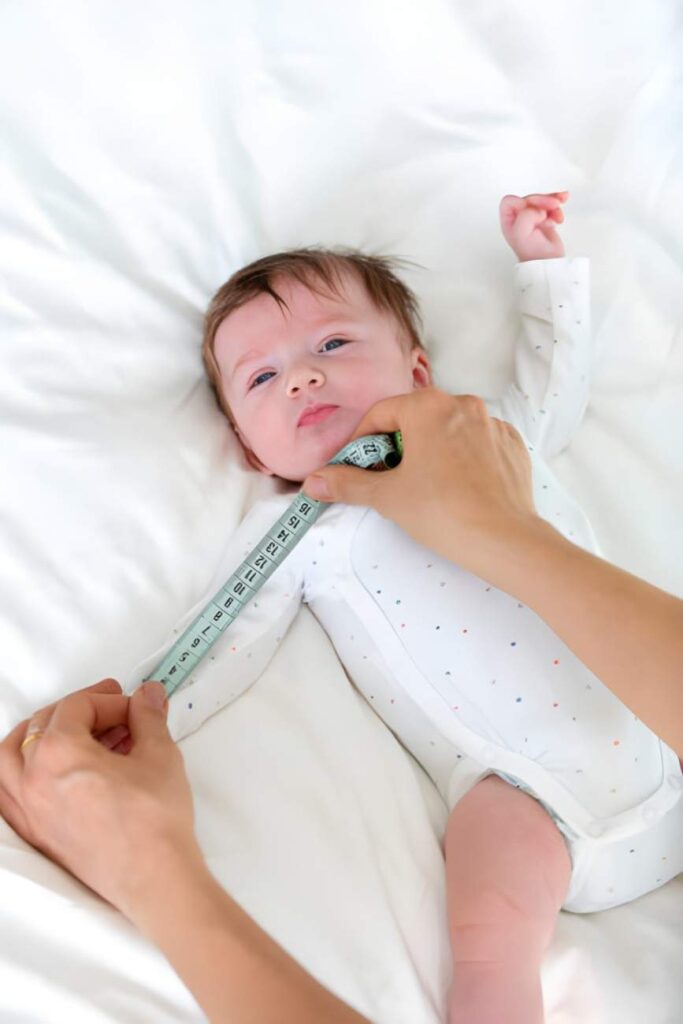
A newborn focuses best on objects located approximately 8 to 12 inches (20 to 30 centimeters) from their eyes. This specific range is not a biological accident. It corresponds almost perfectly to the distance between a caregiver’s face and the infant’s eyes during feeding, whether by breast or bottle. This proximity ensures that the baby can observe the primary features of their caregiver, facilitating the earliest stages of social bonding and emotional attachment.
Outside of this narrow window, the world appears as a blurred wash of light and shadow. Objects held two feet away are indistinct, and the background of a room is essentially invisible to a newborn. In , pediatric researchers continue to emphasize that "face-to-face" time within this 12-inch range is the most effective way to provide visual stimulation to a child in the first weeks of life.
Anatomical Limits of Infant Sight
Several anatomical factors contribute to the restricted visual capabilities of a newborn. The eyes are physically present, but the complex hardware required for high-definition sight is still "under construction."
1. Ciliary Muscle Weakness
In adults, the ciliary muscles change the shape of the lens to focus on objects at varying distances, a process known as accommodation. In newborns, these muscles are weak and uncoordinated. They cannot yet adjust the lens thickness to bring distant objects into focus, leaving them with a "fixed-focus" lens set to that 8-to-12-inch range.
2. Fovea Development
The fovea is the small depression in the retina responsible for sharp central vision. In a newborn, the fovea is immature. It lacks the density of cone cells found in an adult eye. Consequently, even when an object is at the correct distance, the image sent to the brain lacks fine detail.
The Role of Contrast and Color Perception
Newborns possess limited color vision. While the medical community once believed infants saw only in black and white, modern research suggests they can distinguish some colors, particularly red, against a neutral background. However, their primary mode of visual processing relies on high contrast.
Black and white stripes, bullseyes, and simple geometric patterns provide sharp borders that the infant's immature retina can detect. These patterns trigger more neural firing in the visual cortex.
Traditional nursery colors like pale pink or baby blue often blend together for a newborn. Without sharp borders, the baby may find these objects visually uninteresting or even invisible.
Facial Recognition and Visual Tracking
Despite their poor overall vision, newborns show a remarkable preference for the human face. Within hours of birth, infants demonstrate a longer "gaze time" when looking at a face compared to other complex shapes. This preference is hardwired into the brain to ensure survival and social integration.
Tracking, or the ability to follow a moving object with the eyes, is initially jerky and inconsistent. A newborn may lock onto your eyes but lose the connection if you move too quickly or step outside the focal sweet spot. By two months of age, coordination improves, allowing the baby to follow a slow-moving toy across a 90-degree arc.
A newborn's visual acuity is roughly 20/400 to 20/600. This means that what an adult with normal vision can see clearly at 400 or 600 feet, a newborn can only see with similar clarity at 20 feet.
Calculation: (Normal Distance / Infant Distance) = Acuity Ratio
Example: If an infant sees at 20 feet what you see at 600 feet, their vision is 30 times less sharp than yours.
Milestones: Birth to Six Months
The first half-year of life brings an explosive amount of visual growth. As the brain and eyes begin to communicate more effectively, the baby's world expands outward from that initial 12-inch bubble.
| Age | Visual Capability | Behavioral Observation |
|---|---|---|
| 0-1 Month | Fixed focus at 8-12 inches. | Stares at high-contrast borders and faces. |
| 2 Months | Beginning of color distinction (Red/Green). | Follows moving objects; makes brief eye contact. |
| 3 Months | Improved depth perception. | Reaches for objects; shifts gaze between items. |
| 4-5 Months | Full color vision; improved focus. | Recognizes familiar faces from across the room. |
| 6 Months | 20/25 to 20/40 acuity. | Coordinated hand-eye movement; tracks fast objects. |
Strategies to Support Visual Progress
Parents can facilitate visual development through simple, intentional interactions. Since the baby is essentially learning how to "use" their eyes, providing the right environment is key.
When to Consult a Pediatric Specialist
While visual development varies between infants, certain signs may indicate an underlying issue that requires professional evaluation. Early detection of vision problems is crucial for long-term ocular health.
1. Persistent Crossing: It is normal for a newborn's eyes to cross occasionally during the first two months. If the eyes remain crossed or one eye constantly turns in or out after three months, consult a doctor.
2. Lack of Tracking: By three months, most infants follow a moving object. If your baby does not seem to notice movement or fails to make eye contact, an exam is necessary.
3. Extreme Sensitivity: While newborns prefer dim light, an infant who screams or seems in pain when exposed to normal indoor lighting may have an issue with ocular pressure or the retina.
4. Cloudiness: If the pupil (the black center of the eye) appears white, cloudy, or has a visible film, this requires immediate medical attention as it could indicate a congenital cataract.
The journey from the blurry, 12-inch world of a newborn to the sharp, colorful vision of a six-month-old is a testament to the incredible plasticity of the human brain. By understanding that your baby focuses best on your face at the exact distance of a feeding session, you can better appreciate the intricate biological design that fosters the parent-child bond. Providing a high-contrast, face-rich environment during these early weeks sets the foundation for a lifetime of visual exploration.