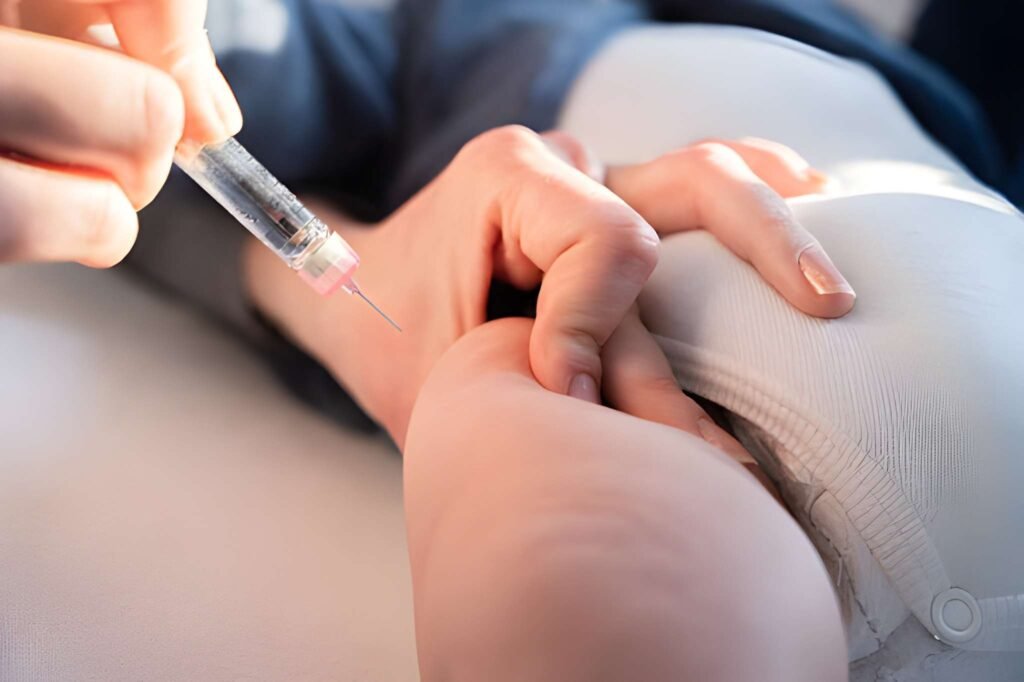
Precision Recovery: Cortisone Injections and Breastfeeding Safety
A specialist’s clinical guide to localized steroids and maternal wellness
The physical demands of early motherhood often lead to musculoskeletal strain that exceeds the body's natural recovery capacity. Between repetitive lifting, awkward nursing positions, and the lingering effects of relaxin hormones from pregnancy, new mothers frequently encounter sharp joint pain or chronic inflammation. When conservative treatments like rest and physical therapy fail, clinicians often suggest a cortisone injection—a localized corticosteroid designed to halt the inflammatory cascade.
As a child and mother specialist, I frequently encounter the hesitation that follows such a recommendation. Mothers often worry that the steroid will pass into their milk, potentially affecting their infant’s growth or suppressing their hard-earned milk supply. Understanding the pharmacological boundary between local treatment and systemic absorption is the key to making an informed, guilt-free decision for your physical health.
Navigation Directory
1. Pharmacology Basics: Local vs. Systemic Steroids 2. Milk Transfer Data: The Relative Infant Dose 3. Common Postpartum Conditions and Injection Sites 4. Impact on Milk Supply and Prolactin 5. Clinical Best Practices: Timing and Observation 6. Frequently Asked Specialist QuestionsPharmacology Basics: Local vs. Systemic Steroids
To understand the safety of cortisone while breastfeeding, we must distinguish between systemic administration (pills or IV) and localized administration (injections into a joint or tendon sheath). When you swallow a steroid pill, the medication must be absorbed by the gut, processed by the liver, and circulated throughout the entire bloodstream to reach its target. This results in higher concentrations in the plasma, which increases the likelihood of transfer into human milk.
In clinical practice, we typically use synthetic corticosteroids like Triamcinolone, Methylprednisolone, or Betamethasone. These are designed for slow release, meaning they provide long-lasting relief at the site of pain without flooding the mother's system all at once.
Milk Transfer Data: The Relative Infant Dose
When evaluating the safety of any medication during lactation, specialists look at the Relative Infant Dose (RID). The RID is the percentage of the mother's dose that reaches the infant through milk, adjusted for weight. As a general rule of thumb in pediatric pharmacology, any medication with an RID of less than 10% is considered compatible with breastfeeding.
| Medication Class | Typical RID in Milk | Clinical Safety Rating |
|---|---|---|
| Local Cortisone Injection | Less than 1% | Highly Compatible |
| Oral Prednisone (Medium Dose) | 1% to 5% | Compatible |
| High-Dose IV Steroids | Over 5% | Requires Observation/Timing |
Because the RID for a localized injection is so remarkably low (often less than 1%), the actual amount of steroid an infant receives is negligible. In many cases, it is lower than the amount of naturally occurring cortisol already present in human milk. Consequently, organizations like the American Academy of Pediatrics (AAP) and the World Health Organization (WHO) consider these injections safe for nursing mothers.
Common Postpartum Conditions and Injection Sites
Why would a breastfeeding mother need a cortisone injection? The postpartum period creates a perfect storm for specific inflammatory conditions.
Often called "Mommy's Thumb," this is inflammation of the tendons on the thumb side of the wrist. It is caused by the repetitive "L-shaped" lift used to pick up an infant and is the most common reason for postpartum injections.
Lingering fluid retention from pregnancy and repetitive wrist flexion during nursing can compress the median nerve. If splinting fails, a localized injection provides significant relief.
Inflammation of the tendon sheath can cause a finger to catch or lock in a bent position. Injections are highly effective at restoring smooth movement without systemic side effects.
Impact on Milk Supply and Prolactin
A persistent concern among lactating parents is the potential for steroids to "dry up" milk. High doses of systemic corticosteroids (like those used to treat a severe asthma flare or an autoimmune flare-up) can occasionally cause a temporary, transient dip in milk supply. This happens because high-dose steroids can slightly suppress the release of prolactin, the hormone responsible for milk production.
However, there is no clinical evidence that a single, localized cortisone injection impacts milk volume. Because the systemic levels remain so low, the prolactin-producing receptors in the brain are unaffected. Most mothers report no change in their supply whatsoever after a joint or tendon injection.
Clinical Best Practices: Timing and Observation
While the procedure is considered safe, applying a few clinical best practices can provide additional peace of mind.
The 4-Hour Peak: If you are concerned about any milk transfer, peak levels of steroids in milk typically occur 1 to 4 hours after administration. Some mothers choose to nurse right before the procedure and then wait 3 to 4 hours before the next feeding to allow the "peak" to pass. However, this is usually considered an extra precaution rather than a medical necessity.
Lidocaine Considerations: Most cortisone injections are mixed with a local anesthetic like lidocaine or bupivacaine to provide immediate numbing. These local anesthetics are also considered very safe and are the same ones used during dental work or minor skin procedures for breastfeeding women.
Frequently Asked Specialist Questions
No. Pumping and discarding milk is not required after a localized cortisone injection. The amount of medication reaching the milk is far too low to cause any pharmacological effect in the infant. You can continue your regular nursing or pumping schedule immediately.
In the unlikely event that a trace amount reaches the baby, it is extremely rare for it to cause behavioral changes. While high-dose oral steroids can cause maternal restlessness, the localized injection does not achieve the systemic levels necessary to impact the infant's sleep or behavior.
Yes. Even with two injections (one in each wrist), the total dose remains localized. Clinicians generally feel comfortable providing multiple injections if needed, as the combined systemic absorption remains well within the safe RID thresholds for lactation.
The safety profile remains consistent whether you have a 2-week-old newborn or a 12-month-old toddler. The biological barrier and the low dose do not change based on the infant's age.
The transition into motherhood is a marathon that requires your body to be as functional and pain-free as possible. Chronic inflammation not only affects your physical ability to care for your child but also impacts your emotional well-being. By utilizing the localized precision of a cortisone injection, you can resolve debilitating pain without compromising the nutritional integrity of your breast milk.
Always inform your orthopedist or primary care provider that you are breastfeeding so they can select the most appropriate corticosteroid and dose. In the year , maternal health is recognized as the foundation of infant health. Taking care of your joints is an essential part of taking care of your baby.