
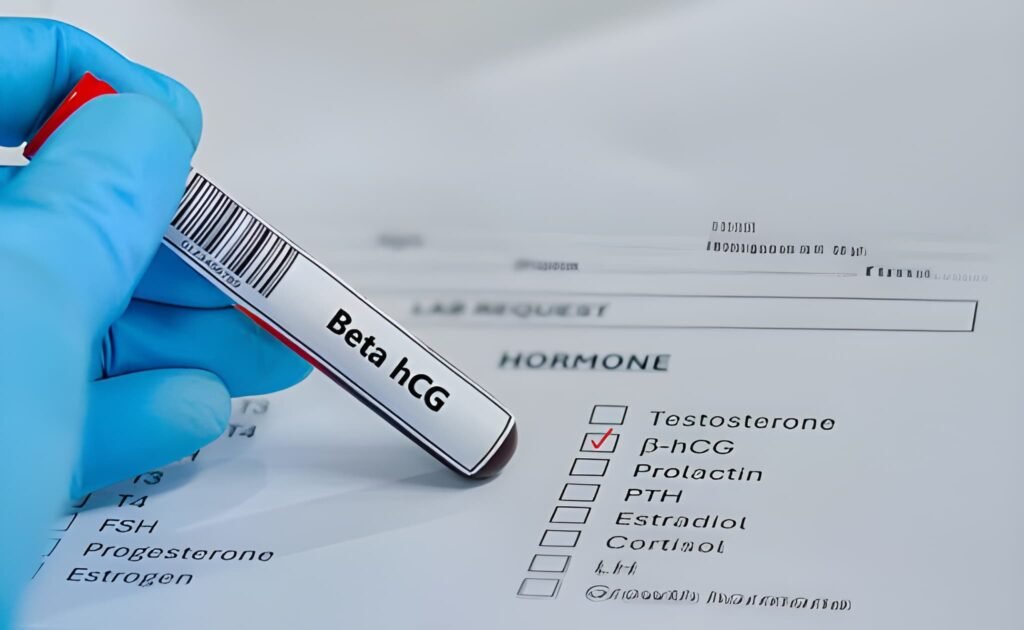
The 14 DPO Test: Navigating Accuracy, hCG Levels, and the Two-Week Wait
A Specialist's Guide to the Most Anticipated Day
Table of Contents
1. 14 DPO: What It Means in Your Cycle
The term 14 DPO, or 14 days past ovulation, marks a pivotal moment. For many women, this day precisely coincides with the expected start date of the next menstrual period. It represents the end of the luteal phase—the window following the release of an egg (ovulation) and preceding menstruation.
The significance of this timing is directly tied to the biological processes that must occur for pregnancy to establish itself. After an egg is fertilized by sperm, it journeys toward the uterus. The crucial step is implantation, the moment the developing cluster of cells, the blastocyst, burrows into the uterine lining (endometrium). Implantation typically occurs between 6 and 12 DPO, with 9 DPO representing the statistical average. By 14 DPO, this process is usually complete.
Key Concept: The Luteal Phase. The length of the luteal phase remains relatively constant for most women, typically lasting 12 to 16 days. Since 14 DPO falls squarely in this typical range, the body either starts progesterone withdrawal (leading to a period) or continues progesterone production (sustained by the new pregnancy).
At this stage, the body stands at a hormonal crossroads. If conception and implantation were successful, the newly forming placenta begins its vital work, flooding the system with a unique signal. If not, the hormone progesterone begins to drop, signaling the uterine lining to shed, resulting in the menstrual flow.
2. The Science of the "Big Fat Positive": hCG Levels
Every home pregnancy test seeks one target: human Chorionic Gonadotropin (hCG), often called the "pregnancy hormone." The production of hCG begins immediately upon implantation. This hormone is crucial; it instructs the corpus luteum (the remnants of the follicle that released the egg) to continue producing progesterone, which maintains the uterine lining and prevents menstruation.
How hCG Levels Rise
The key characteristic of hCG in a healthy early pregnancy is its exponential growth. On average, hCG levels double every 48 to 72 hours. This doubling rate is why testing too early can yield a false negative, but by 14 DPO, the levels should be substantial enough for detection.
| Days Past Ovulation (DPO) | Approximate Median hCG Level (mIU/mL) | Detection Likelihood on 25 mIU/mL Test |
|---|---|---|
| 10 DPO | 12 | Low (Less than 50%) |
| 12 DPO | 48 | Moderate (Above 80%) |
| 14 DPO | 137 | High (Near 99%) |
| 16 DPO | 334 | Highest (99%+) |
Most standard over-the-counter home pregnancy tests (HPTs) detect hCG levels at or above 25 milli-international units per milliliter (25 mIU/mL). Given the median level of 137 mIU/mL at 14 DPO, the vast majority of pregnant individuals will have detectable hormone levels by this day.
The Late Implantation Factor
While the 14 DPO mark provides high confidence, consider the possibility of late implantation. If implantation occurred on 12 DPO, the latest normal day, the hCG level may be closer to 25 mIU/mL. If your home test is less sensitive, or your urine is diluted, you might still see a negative result even though you are pregnant. This situation underscores why the gold standard remains testing after a missed period.
3. 14 DPO Accuracy: The Golden Standard
By 14 DPO, most home pregnancy tests claim an accuracy rate exceeding 99% when used correctly. This point in the cycle is often considered the ideal testing time because it balances the need for patience (allowing hCG to rise) with the desire for a timely answer.
Why 14 DPO is Reliable
- Implantation Window Passed: The window for successful implantation (DPO 6-12) has closed. If the egg implanted, hCG production has been underway for at least two days, often more.
- Hormone Buildup: The exponential doubling of hCG means that a hormone level of 12 mIU/mL at 10 DPO has likely multiplied five to ten times by 14 DPO, ensuring it surpasses the 25 mIU/mL threshold of most tests.
- Synchronization with Missed Period: In a textbook 28-day cycle with ovulation on day 14, 14 DPO equals Cycle Day 28, which is the day the period is expected. Testing now provides an answer at the earliest moment of menstrual absence.
Calculation Example: hCG Progression
Imagine implantation occurred late, on 12 DPO, and the initial detectable hCG level was 10 mIU/mL. Assuming a 48-hour doubling time:
hCG at 12 DPO = 10 mIU/mL
hCG at 14 DPO = 10 mIU/mL x 2 = 20 mIU/mL
In this scenario, a highly sensitive test (e.g., 10 mIU/mL) may register positive, but a standard test (25 mIU/mL) might still register negative. This calculation emphasizes the value of retesting if the result is negative.
4. Decoding Ambiguity: False Negatives and Positives
Understanding the possibilities beyond a clear positive or negative result is crucial for managing the emotional journey of the two-week wait.
The False Negative at 14 DPO
A negative result when a pregnancy exists is the definition of a false negative. At 14 DPO, this usually results from one of three factors:
- Late Implantation: As previously discussed, implantation occurring on 11 DPO or 12 DPO means hCG has not had enough time to rise above the test's sensitivity threshold.
- Diluted Urine: Taking the test later in the day, especially after drinking significant amounts of fluid, lowers the concentration of hCG in the urine, making it harder for the test to detect.
- Test Sensitivity or Error: Using a less sensitive test (some require 50 mIU/mL) or failing to follow instructions precisely (e.g., reading the result outside the required timeframe) can cause an incorrect reading.
The False Positive
A false positive (a positive result when no viable pregnancy exists) is much rarer than a false negative, but it occurs in specific situations:
- Chemical Pregnancy: This is the most common cause. A fertilized egg implants briefly and starts producing hCG, resulting in a positive test, but the pregnancy fails shortly after implantation. A period follows shortly after the positive test, often resembling a heavier flow.
- Residual hCG from Fertility Treatments: If a woman received an hCG "trigger shot" (often used in IVF/IUI cycles), the hormone can linger in the system for up to 14 days, causing a misleading positive.
- Medications or Conditions: Rarely, certain medications or medical conditions (like pituitary disorders or specific types of ovarian tumors) can cause hCG production.
5. Symptoms: Pregnancy Signals Versus Premenstrual Signs
The biggest challenge during the 14 DPO waiting period is that early pregnancy symptoms and premenstrual syndrome (PMS) symptoms are caused by the same hormone: progesterone. Progesterone rises after ovulation whether a pregnancy occurs or not, leading to breast tenderness, fatigue, and mood shifts. Telling the difference requires subtle observation.
| Symptom | Potential Pregnancy Indicator | Potential PMS Indicator |
|---|---|---|
| Cramping | Mild, light twinges, often focused lower, sometimes described as a 'pulling' sensation. | Dull, heavy, or more generalized pain that builds in intensity. |
| Spotting/Bleeding | Light pink or brown, transient, lasts hours to maybe two days (Implantation Bleeding). | Begins as red, darkens, and increases to a steady flow. |
| Breasts | Darkening of areolas, noticeable veins, intense nipple sensitivity. | Generalized soreness or heaviness that eases when the period starts. |
| Nausea | Often accompanied by strong aversions to smells or tastes, may be present throughout the day. | Usually related to gut distress preceding menstruation, less persistent. |
| Fatigue | Sudden, overwhelming exhaustion that does not resolve with rest; tied to rapid placental growth. | Typical tiredness that accompanies general luteal phase hormonal shifts. |
5.1. Interactive Symptom Comparison
Use the following interactive toggle to compare the primary mechanisms causing the symptoms at this stage:
At 14 DPO, both PMS and early pregnancy symptoms rely heavily on two hormones:
Progesterone (The Shared Symptom Trigger)
Progesterone, released by the corpus luteum, is high in the luteal phase regardless of pregnancy. It causes: Bloating, breast tenderness, fatigue, and mood swings. These symptoms are therefore not reliable indicators on their own.
hCG (The Pregnancy Differentiator)
HCG is only present with a pregnancy. Its presence and rapid rise directly trigger: Sustained progesterone production, hyper-olfaction (strong sense of smell), and often pronounced nausea/morning sickness. If symptoms persist past the day your period is due, hCG is the likely factor.
6. Test Technique: Optimizing Your Home Kit
Achieving the most accurate result at 14 DPO depends not just on your hormone levels, but on flawless test execution. Simple mistakes often lead to the disappointment of a false negative.
- First Morning Urine (FMU): Always use your first void of the morning. Urine is most concentrated overnight, meaning the hCG levels are at their highest and most detectable point. Avoid drinking excessive fluids for several hours before testing.
- Read Instructions Meticulously: Different tests have different waiting times (usually 3 to 5 minutes) and reading windows. Set a timer and do not read the result before the minimum time or after the maximum time (the latter can produce an invalid "evaporation line").
- Check Expiration Date: Ensure your test has not expired. Chemical reagents degrade over time, reducing the test's accuracy.
7. What to Do After the Result: Positive or Negative
The result, whether the long-awaited positive or a discouraging negative, dictates the next steps you must take to maintain maternal and child health.
A Clear Positive Result
If you see two lines, a plus sign, or the word "Pregnant," congratulations. Your next steps are straightforward:
- Schedule an Appointment: Contact your healthcare provider immediately to schedule your first prenatal appointment. While this appointment may not occur for several weeks, it initiates your medical file and allows the provider to give you necessary immediate advice.
- Start/Continue Prenatal Vitamins: Ensure your prenatal vitamin contains at least 400 micrograms (mcg) of folic acid. This is essential for preventing neural tube defects in the earliest weeks of development.
- Adjust Lifestyle: Eliminate alcohol, tobacco, and recreational drugs. Review all current medications with your provider to ensure their safety during pregnancy.
A Negative Result (and Period Has Not Started)
If you receive a negative test at 14 DPO, but your period has not started, maintain hope and patience. Remember the late implantation calculation: your hCG levels may simply be too low yet.
- Wait 48 Hours and Retest: Since hCG doubles every 2 to 3 days, waiting two days gives the hormone a high probability of reaching a detectable level. Use the most sensitive test available and apply the FMU rule.
- Consider a Blood Test: If the second test is also negative, but your period is still absent or you experience concerning symptoms, request a quantitative serum hCG blood test from your doctor. This test measures the exact concentration of hCG, providing a definitive answer far more reliably than any home test. Blood tests can detect hCG levels as low as 1 mIU/mL.
Perspective and Socioeconomic Consideration: In the US, access to reliable, highly sensitive home tests is widespread. However, remember that for continuous tracking or follow-up after a negative, repeated testing can become financially burdensome. Consulting your insurance provider or a community health center for a low-cost or free blood test provides the most accurate, cost-effective confirmation when ambiguity persists.
Whether this 14 DPO day brings a clear result or requires a few more days of waiting, approach the process with calm understanding of the science. The journey into motherhood is built on patience and knowledge. Trust the hormonal changes in your body, utilize accurate testing techniques, and always consult a healthcare professional for definitive confirmation and guidance.



