The Art of the Newborn Bath
A Specialist's Demonstration of Safety, Technique, and Bonding
In the first few days of life, the world of a newborn is defined by sensations. The transition from the warm, fluid environment of the womb to the dry air of the nursery is significant. As a specialist, I often emphasize that bathing is not merely about hygiene; it is a sensory experience that can either soothe or stress a baby. Most pediatric organizations now recommend delaying the first bath for 24 hours to allow the vernix caseosa—the waxy, protective coating on the skin—to be absorbed. This natural substance provides antimicrobial protection and helps regulate the baby's temperature.
Once you begin your routine, remember that newborns do not require daily bathing. Their skin is incredibly thin and prone to drying. For most infants in the first month, two to three baths per week is sufficient, provided the diaper area is kept meticulously clean between sessions.
Sponge vs. Tub Bathing: The Critical Distinction
The method you choose is determined entirely by the healing process of two specific areas: the umbilical cord stump and, if applicable, the circumcision site. Submerging these areas in water before they have fully healed can increase the risk of infection and delay the drying process.
Sponge Bath Phase
Duration: Birth to approximately 2 weeks.
Criteria: Use this method until the umbilical cord stump falls off and the area is completely dry. Keep the baby wrapped in a towel, exposing only the limb or area currently being cleaned to prevent chilling.
Tub Bath Phase
Duration: 2 weeks and beyond.
Criteria: Transition here once the naval and circumcision sites are healed. Use a specialized infant tub with a non-skid surface or a reclining mesh support to keep the baby's head well above the water line.
The Anatomy of the Perfect Setup
Efficiency is a safety requirement. Because you can never leave a baby unattended in a bath—not even for a second—you must gather all supplies before the first drop of water is drawn. As a nurse demonstrating this to parents, I suggest the "Reach Rule": if you have to take a step to reach it, your setup is not ready.
- Warm Water: Deep enough to keep the baby warm but not deep enough to pose a risk.
- Two Towels: One for the baby to lie on and one with a hood for immediate drying.
- Two Washcloths: One for the face (plain water) and one for the body (mild soap).
- Mild, pH-neutral Cleanser: Fragrance-free and designed specifically for neonatal skin.
- Clean Diaper and Clothes: Laid out and ready for immediate dressing.
- Cotton Balls: For cleaning the delicate eye area.
The Science of Water Temperature
A newborn’s skin is 30% thinner than an adult’s, making them highly susceptible to scalds and rapid heat loss. The ideal water temperature for a newborn bath is between 98 degrees and 100 degrees Fahrenheit (37 to 38 degrees Celsius).
Step-by-Step Nursing Demonstration
In this clinical demonstration, we follow a "Cleanest to Dirtiest" protocol. This ensures that bacteria from the diaper area are not transferred to the eyes or face.
-
1The Face and Eyes: Dip a cotton ball or a soft cloth in plain, warm water. Wipe from the inner corner of the eye outward. Use a fresh section of the cloth for each eye to prevent cross-contamination. Gently wipe the outer ears and the folds of the neck, where milk and moisture often collect.
-
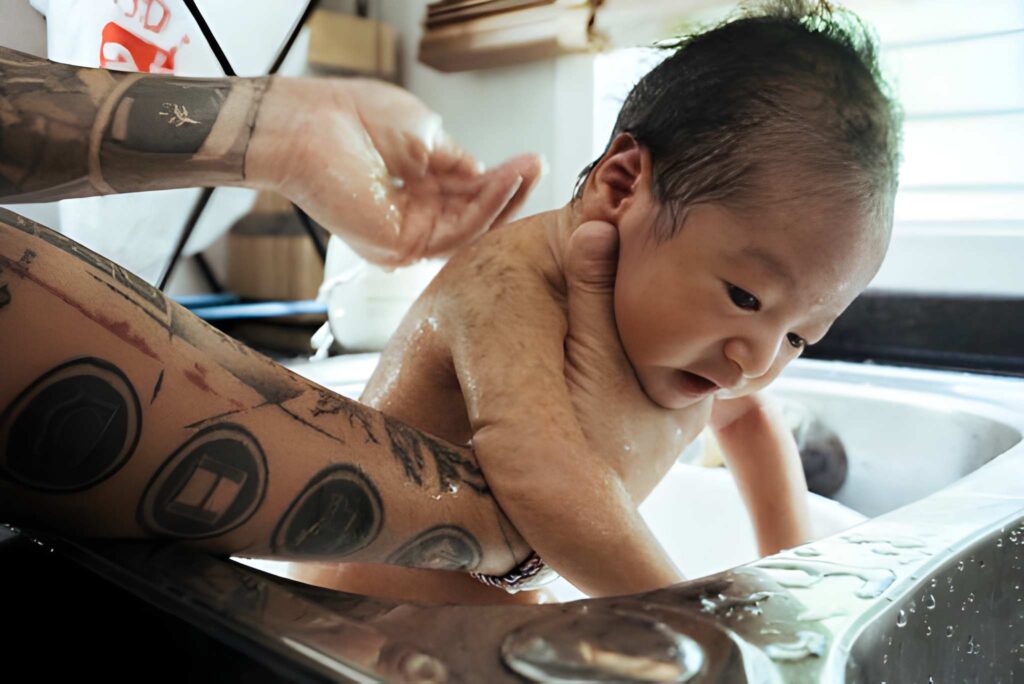
2Hair and Scalp: Support the baby's head and neck. Use a small amount of mild shampoo. Massage the scalp gently with your fingertips or a soft baby brush. This helps prevent cradle cap (seborrheic dermatitis). Rinse by cupping water in your hand, ensuring no soap runs into the eyes.
-
3The Torso and Limbs: Using a soapy washcloth, gently wash the arms, chest, and back. Pay special attention to the "creases"—under the arms, behind the knees, and between the fingers and toes. Rinse thoroughly to ensure no soap residue is left to irritate the skin.
-
4The Diaper Area: Save this for last. For girls, always wipe from front to back to prevent urinary tract infections. For boys, wash the scrotum and penis gently. If the baby is uncircumcised, do not forcibly retract the foreskin; it is usually attached to the glans and will naturally separate in later years.
Caring for Newborn Skin Post-Bath
Once the bath is complete, lift the baby out with both hands, supporting the head and the bottom. Immediately wrap them in a hooded towel. Pat the skin dry rather than rubbing it, as friction can damage the delicate skin barrier. Ensure the skin folds are completely dry to prevent moisture-induced rashes.
Moisturizing and Protective Barriers
In , clinical evidence suggests that for many babies, no lotion is needed. However, if your newborn has signs of dry, peeling skin, a fragrance-free, hypoallergenic ointment or thick cream is more effective than watery lotions. If the umbilical cord is still attached, leave it alone; do not apply alcohol or powders to it. Keeping it dry and exposed to air is the fastest way to ensure it falls off safely.
Crying during the bath: This is normal! The change in temperature and the sensation of being naked can be frightening. Try a "swaddle bath"—keep the baby wrapped in a thin muslin cloth while in the water. This provides a sense of security and keeps them warmer.
Shaking or Shivering: This is a sign the baby is too cold. Shorten the bath duration and ensure the water stays at the target temperature. Wrap the baby in a pre-warmed towel immediately after.
Slippery Skin: Babies become incredibly difficult to hold when soapy. Always keep one firm hand on their torso or under their armpits at all times.
The Specialist's Final Perspective
As you progress through the first few weeks of , you will notice that your confidence grows with every bath. What starts as a nervous clinical task soon becomes a cherished evening ritual. Pay attention to your baby’s cues—if they seem overwhelmed, keep the session short. If they find the water relaxing, enjoy the quiet moments of eye contact and splashing. This simple routine is the foundation of a lifetime of health and trust.