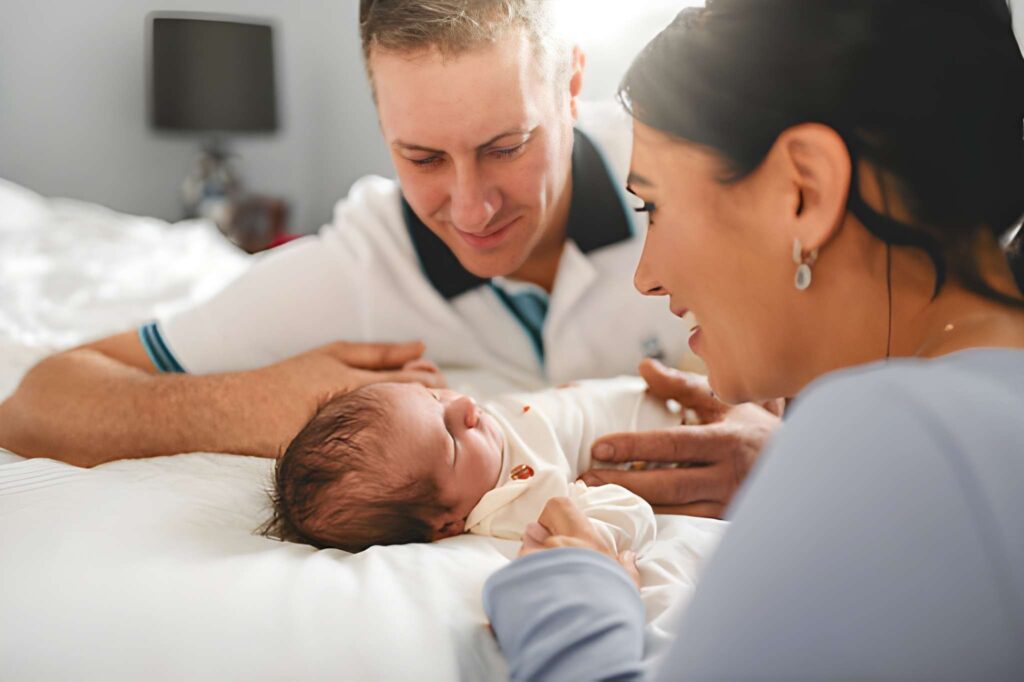
The Guardian’s Blueprint: Navigating Newborn Safety in the First Months
Expert guidance on creating a secure environment for your newest family member
Bringing a newborn home marks the beginning of a profound transformation. As a child and mother specialist, I have observed that for most parents, the initial joy is often accompanied by a significant weight of responsibility. Suddenly, the world feels sharper, louder, and more hazardous. This instinctual hyper-vigilance serves a purpose, but it can also be overwhelming without a structured framework of knowledge.
Newborn safety is not about living in fear; it is about creating a protective "bubble" that allows your infant to thrive while minimizing preventable risks. From the physics of safe sleep to the biological requirements of hygiene and infection control, understanding the why behind safety protocols empowers you to act with confidence. This guide serves as a clinical yet compassionate roadmap for your family's first 100 days.
Guide Contents
1. The Golden Standard: Safe Sleep and SIDS Prevention 2. Handling and Physical Support: Protecting the Neck and Spine 3. Transport Security: Mastering the Rear-Facing Car Seat 4. Home Environment: Temperature, Air, and Surroundings 5. Infection Control: Managing Visitors and Germs 6. Bathing and Water Safety: The Three-Inch Rule 7. Crisis Preparedness: Choking and Vital ResponsesThe Golden Standard: Safe Sleep and SIDS Prevention
Sleep safety remains the single most important topic in neonatal care. Sudden Infant Death Syndrome (SIDS) and other sleep-related deaths are often linked to environmental factors that interfere with an infant's breathing or ability to wake up. To mitigate these risks, specialists worldwide advocate for the ABCs of Safe Sleep.
The baby should always sleep in their own space. While room-sharing is highly recommended for the first six months, bed-sharing significantly increases the risk of suffocation or entrapment.
Always place the infant on their back for every sleep. The anatomy of the infant airway is such that sleeping on the back actually prevents choking more effectively than stomach sleeping.
Use a firm, flat mattress in a safety-approved crib, bassinet, or pack-and-play. The surface should be covered only by a tight-fitting sheet with no other items present.
One of the most common mistakes I see as a nurse is the inclusion of "comfort items" in the crib. Modern marketing often suggests that bumpers, quilts, and stuffed animals make a nursery cozy. However, in the year , clinical data confirms these are hazards. A bare crib is a safe crib. If you are worried about your baby being cold, utilize a wearable blanket or "sleep sack" rather than a loose quilt.
Handling and Physical Support: Protecting the Neck and Spine
A newborn’s physical proportions are unique. The head accounts for approximately 25% of their total body weight, yet the neck muscles are incredibly weak. This creates a significant risk for injury if the head is not supported during every movement.
Proper Lifting Technique
When lifting your newborn, slide one hand under their head and neck, and the other under their bottom. Maintain this two-point support until the baby is securely against your chest or placed on a flat surface. This prevents the "whiplash" effect that can occur with sudden movements. Furthermore, always ensure that anyone holding the baby—especially older siblings—is seated on a couch or floor to prevent accidental drops.
Transport Security: Mastering the Rear-Facing Car Seat
Car safety is a matter of physics. In the event of a collision, a rear-facing car seat cradles the infant's entire head, neck, and spine, distributing the force of the impact across the back of the seat rather than focusing it on the fragile neck.
Car Seat Installation Checklist
- Rear-Facing Only: Maintain this position as long as possible (typically until age 2 or the weight limit).
- The Inch Test: The seat should not move more than one inch in any direction at the base.
- Pinch Test: You should not be able to pinch any slack in the harness at the baby's shoulder.
- Chest Clip Level: The clip must be at armpit level to keep the straps properly positioned.
- No Heavy Coats: Bulky winter coats compress in a crash, leaving the harness too loose. Use a blanket over the harness instead.
Home Environment: Temperature, Air, and Surroundings
Your home environment plays a silent but vital role in newborn health. Infants are unable to regulate their body temperature as efficiently as adults. Overheating is a known risk factor for SIDS, as it can lead to a deeper, more difficult-to-wake sleep state.
The ideal nursery temperature should be between 68 and 72 degrees Fahrenheit (20 to 22 degrees Celsius). A good rule of thumb for clothing is to dress the baby in one more layer than you are wearing comfortably. If the baby's chest feels hot to the touch or they are sweating, they are overdressed.
Air Quality and Smoking
Second-hand and third-hand smoke (the residue left on clothes and furniture) significantly irritate an infant's developing lungs and increase the risk of respiratory infections and SIDS. If a family member smokes, they should do so outdoors, change their clothes, and wash their hands before touching the infant.
Infection Control: Managing Visitors and Germs
A newborn’s immune system is a "blank slate." While they receive some passive immunity from the mother in utero, they are highly susceptible to common viruses that would only cause a mild cold in an adult. For a newborn, a simple fever (100.4 F or higher) is an automatic medical emergency requiring a hospital visit.
Implementation of a strict "Handwashing Policy" is essential. Ask all visitors to wash their hands immediately upon entering your home. Additionally, advise anyone who feels slightly unwell to stay home. It is perfectly acceptable to ask visitors to be up-to-date on their TDAP (Whooping Cough) and Flu vaccinations before meeting the baby.
During the first six to eight weeks, it is generally wise to avoid crowded indoor spaces. If you must go out, use a baby carrier or keep the stroller covered with a light, breathable muslin cloth to prevent strangers from touching or leaning over the infant.
Never leave a baby alone with a pet, regardless of how gentle the animal has been in the past. Introduce the baby slowly and maintain your pet's routine to prevent jealousy or anxiety. Always supervise all interactions.
Bathing and Water Safety: The Three-Inch Rule
Bathing is a wonderful bonding experience, but it requires 100% focused attention. An infant can drown in as little as one to two inches of water in less than 60 seconds. This is a silent event; unlike adults, babies do not splash or shout when in distress.
Before you even undress the baby, gather all your supplies: towels, soap, a clean diaper, and clothes. Once the baby is in the water, your hand should never leave their body. This "touch supervision" ensures that if the baby slips or moves suddenly, you are there to stabilize them instantly. Always test the water with your elbow, not your hand, as the elbow is more sensitive to heat.
Crisis Preparedness: Choking and Vital Responses
Newborns explore the world through their mouths, but they also have narrow airways and a developing gag reflex. Choking is a primary concern once the baby begins to have more motor control, but it can also happen during feeding.
| Scenario | Immediate Action |
|---|---|
| Gagging/Coughing | Watch closely. If the baby is coughing, they are still breathing. Do not intervene yet. |
| Silent Choking | Perform 5 back blows and 5 chest thrusts. Call 911 immediately. |
| Nose/Mouth Mucus | Use a bulb syringe or nasal aspirator to clear the airway. |
Finally, trust your intuition. As a parent, you spend the most time with your infant. If you notice a change in their breathing (too fast, too slow, or pulling in at the ribs), their color (blue or pale), or their level of alertness, do not hesitate to seek medical care. Safety is a partnership between your vigilance and professional medical support.
Your journey as a protector has just begun. By implementing these standards of care, you are not just preventing accidents; you are providing the secure foundation upon which your child will grow. Take a deep breath—you have the tools and the instincts to keep your baby safe.