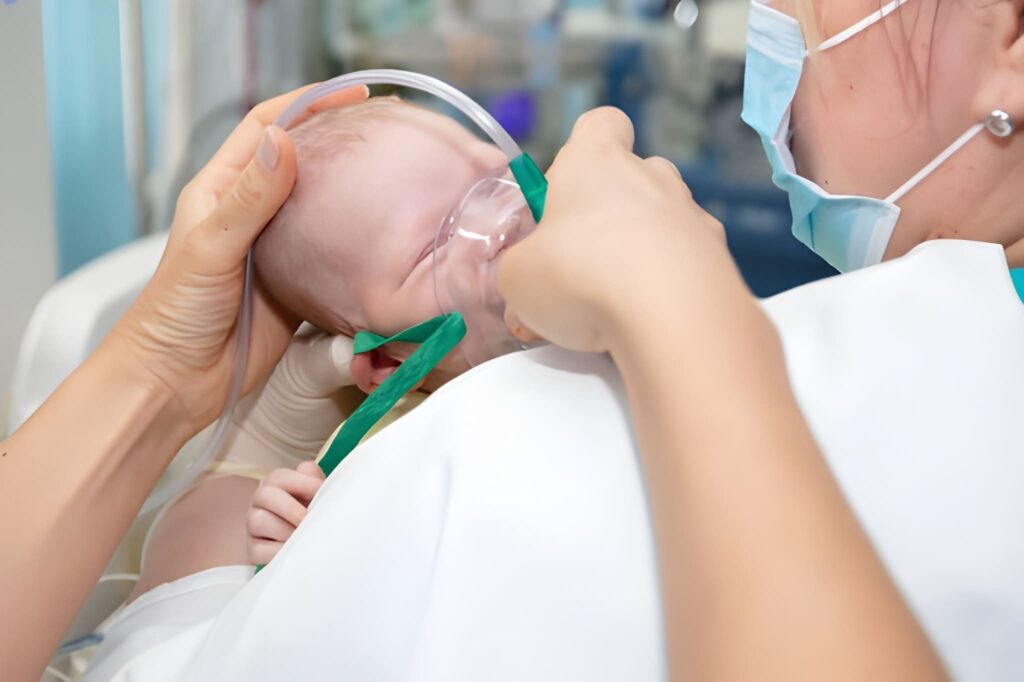
The Miracle of the First Breath: Understanding Neonatal Respiratory Transition
A detailed exploration of the physiological shifts, mechanical triggers, and clinical assessments that define a newborn's first moments of life.
The transition from a fluid-filled uterine environment to an air-breathing existence represents the most complex physiological shift a human ever undergoes. In the womb, the placenta performs the heavy lifting of gas exchange, effectively acting as the fetal lungs. However, within seconds of delivery, the newborn must clear its airways of liquid, inflate millions of tiny air sacs, and establish a permanent rhythm of breathing. This monumental "first breath" is the hallmark of neonatal vitality and the result of a perfectly timed sequence of biological events.
The Grand Shift: Fetal vs. Neonatal Circulation
To understand neonatal breathing, one must first examine the fetal circulation. In utero, the lungs are high-pressure, fluid-filled organs. Because they do not need to process oxygen, the fetal heart uses bypasses—the ductus arteriosus and foramen ovale—to shunt blood away from the lungs and toward the rest of the body. The placenta provides oxygenated blood via the umbilical vein, bypassing the non-functional pulmonary system.
At birth, the clamping of the umbilical cord and the first intake of air trigger an immediate drop in pulmonary vascular resistance. As the lungs expand with air, blood rushes into the pulmonary vessels for the first time. This surge in blood flow increases pressure in the left atrium of the heart, causing the foramen ovale to snap shut like a one-way valve. Over the following hours and days, the ductus arteriosus also constricts and closes, finalizing the transition to an independent circulatory system in .
Fetal State
- Lungs: Fluid-filled and high pressure.
- Oxygen Source: Placenta.
- Blood Flow: Shunted away from lungs.
- Shunts: Foramen ovale and ductus arteriosus open.
Neonatal State
- Lungs: Air-filled and low pressure.
- Oxygen Source: Atmosphere.
- Blood Flow: Directed into pulmonary system.
- Shunts: Functional closure within minutes/hours.
Triggers of the First Breath: Mechanical and Chemical
What exactly prompts a newborn to take that inaugural gasp? The stimulus is multi-factorial, involving mechanical, chemical, and thermal changes. During a vaginal delivery, the "thoracic squeeze" plays a vital role. As the infant passes through the birth canal, the chest is compressed, forcing out about one-third of the fetal lung fluid. Upon delivery, the chest recoils, creating a passive inspiration that helps pull air into the upper airways.
Chemical triggers also ignite the respiratory center in the brain. As the placenta detaches or the cord is clamped, the infant experiences a brief drop in oxygen (hypoxia) and a rise in carbon dioxide (hypercapnia). This shift in blood chemistry, combined with the sudden change from a warm, muffled environment to a cold, bright, and loud delivery room, shocks the system into action. The tactile stimulation of being handled and dried by clinicians further encourages the infant to expand its lungs and cry.
The Critical Role of Surfactant
Inflation is only half the battle; keeping the lungs inflated is the other. This is where surfactant becomes the hero of the story. Surfactant is a soapy, lipoprotein complex produced by Type II alveolar cells. Its primary job is to reduce surface tension within the alveoli (the tiny air sacs). Without surfactant, the wet walls of the alveoli would stick together after every exhale, requiring a massive, exhausting effort to reinflate them with the next breath.
Surfactant production typically ramps up significantly around 34 to 36 weeks of gestation. This biological timeline explains why premature infants are at such high risk for Respiratory Distress Syndrome (RDS). Without adequate surfactant, their lungs collapse with every breath, leading to rapid fatigue and respiratory failure. In modern neonatal care, synthetic surfactant can be administered directly into the lungs to stabilize these tiny patients.
The Golden Minute: Initial Clinical Assessment
Neonatal resuscitation guidelines refer to the first 60 seconds of life as "The Golden Minute." During this window, clinicians perform a rapid assessment to determine if the infant requires intervention. The vast majority of newborns (about 90%) make the transition successfully with simple drying and stimulation. However, the team monitors for three key indicators: Is the baby full-term? Is the baby breathing or crying? Does the baby have good muscle tone?
APGAR Scoring and Vital Signs
To standardize the evaluation of the newborn's transition, Dr. Virginia Apgar developed the APGAR score in 1952. Performed at 1 minute and 5 minutes of life, the score assesses five categories, with 2 points possible in each. A score of 7 to 10 is considered normal, while lower scores indicate the need for medical support.
| Category | 0 Points | 1 Point | 2 Points |
|---|---|---|---|
| Activity (Tone) | Limp/Flaccid | Some flexion | Active motion |
| Pulse | Absent | Under 100 bpm | Over 100 bpm |
| Grimace (Reflex) | No response | Grimace | Cry or active withdrawal |
| Appearance (Color) | Blue/Pale | Acrocyanosis (Blue limbs) | Completely pink |
| Respiration | Absent | Weak/Irregular | Strong cry |
Common Respiratory Challenges: TTN and RDS
Even a full-term infant can face hurdles during the transition. One of the most common issues is Transient Tachypnea of the Newborn (TTN). This occurs when the fetal lung fluid is not cleared or absorbed quickly enough. The baby may breathe very rapidly (over 60 breaths per minute) and exhibit grunting or nasal flaring as they work to clear the fluid. TTN usually resolves within 24 to 72 hours with supportive care like supplemental oxygen.
Management and Supportive Care
Supportive care for the respiratory transition focuses on maintaining a clear airway and adequate oxygenation. Simple maneuvers like "sniffing position" (slightly extending the neck) can open the airway. For infants struggling with fluid clearance, CPAP (Continuous Positive Airway Pressure) provides a constant stream of air that keeps the alveoli open, making it easier for the baby to breathe and absorb fluid.
Clinical Metric: Calculating Neonatal Respiratory Rate
A normal neonatal respiratory rate is between 40 and 60 breaths per minute. Because newborns have an irregular breathing pattern (periodic breathing), clinicians must count for a full 60 seconds for accuracy.
Rate = (Total Breaths in 60 Seconds)
If Rate > 60: Tachypnea (Sign of distress or TTN)
If Rate < 30: Bradypnea (Sign of CNS depression or exhaustion)
Additionally, clinicians monitor "work of breathing," looking for retractions (skin pulling in around the ribs) or grunting (exhaling against a closed glottis to maintain lung volume).
The journey from the first gasp to a stable respiratory rhythm is a testament to the resilience of the neonatal body. While most infants navigate this transition with ease, the specialized knowledge of the delivery team ensures that even those who struggle have the support needed to find their breath. By understanding the mechanics of fluid clearance and the vital role of surfactant, we can better appreciate the complex, beautiful, and high-stakes moment that is a baby's first breath.