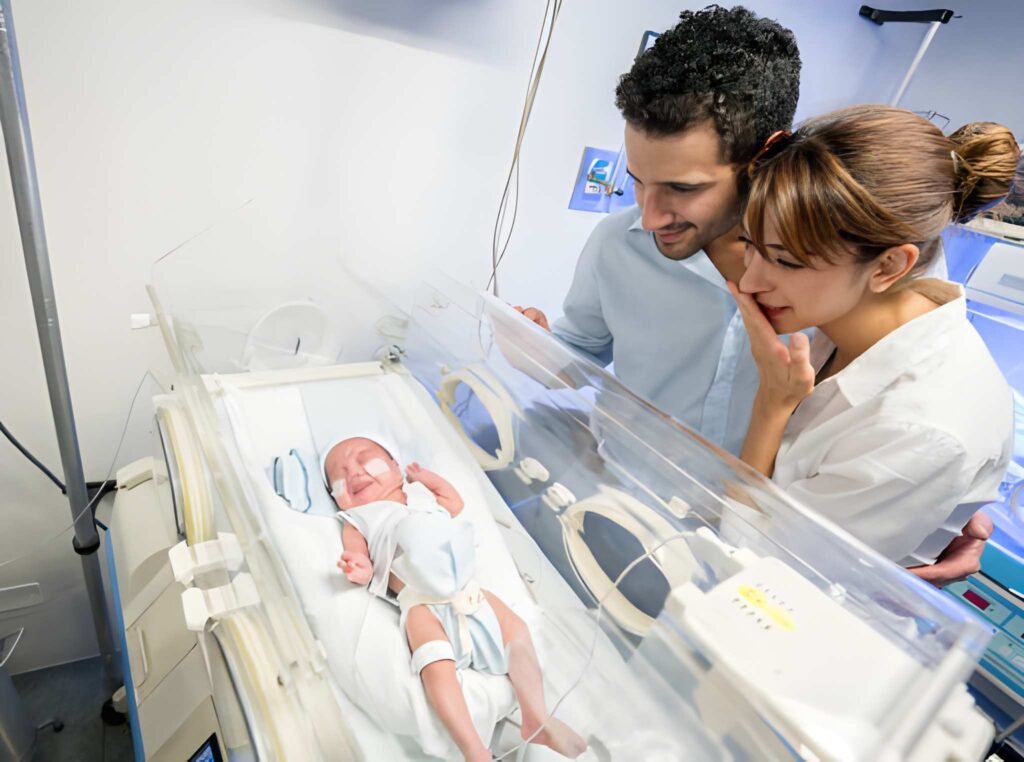
A clinical and socioeconomic analysis of infants born before 37 weeks of gestation, providing clarity for families and healthcare providers.
Every year in the United States, approximately one in ten infants arrives before the expected delivery date. A newborn reaches the threshold of prematurity when the delivery occurs before the completion of 37 weeks of gestation. This biological marker represents more than just a date on a calendar; it signifies a transition from the protective, nutrient-rich environment of the womb to the external world before the body has fully completed its developmental blueprint.
The Universal Definition of Preterm Birth
Medical professionals define a full-term pregnancy as one that lasts between 37 and 42 weeks. An infant born before 37 weeks (specifically, 36 weeks and 6 days or earlier) falls under the clinical umbrella of preterm birth. This definition remains consistent across global healthcare systems, although the survival rates and care standards vary significantly based on regional resources and socioeconomic factors.
The distinction between "preterm" and "premature" often causes confusion. While people use these terms interchangeably, preterm refers strictly to the timing of the birth, whereas prematurity often describes the physiological underdevelopment associated with that early arrival. As a child specialist, I emphasize that every day spent in the womb during the final weeks of pregnancy serves a specific purpose, particularly for brain and lung maturation.
Categories of Prematurity: The Vital Distinctions
Not all premature births carry the same level of risk. Clinicians categorize these infants based on the degree of their early arrival to determine the necessary level of medical intervention. The following table illustrates these critical distinctions.
| Category | Gestational Age | Typical Care Level |
|---|---|---|
| Late Preterm | 34 to 36 weeks and 6 days | Special Care Nursery or Observation |
| Moderate Preterm | 32 to 34 weeks | Neonatal Intensive Care (NICU) Level II |
| Very Preterm | Less than 32 weeks | NICU Level III or IV |
| Extremely Preterm | Less than 28 weeks | Advanced Life Support / High-Level NICU |
Late preterm infants often appear physically similar to full-term babies, but they face higher risks for temperature instability, feeding difficulties, and jaundice. On the other end of the spectrum, extremely preterm infants require sophisticated technology to replicate the functions of the placenta and the womb.
Why Does Early Birth Happen? Exploring the Perspectives
The causes of premature birth are multifactorial. In many cases, the exact trigger remains unknown, yet researchers identify several primary categories of risk. Understanding these helps in both prevention and preparation.
Chronic conditions such as hypertension (preeclampsia) and gestational diabetes often necessitate an early delivery to protect the health of both the mother and the infant. Infections in the reproductive tract can also trigger early labor by weakening the amniotic sac.
In the United States, high levels of stress, lack of access to prenatal care, and environmental pollutants contribute to higher rates of prematurity. Socioeconomic disparities remain a significant concern, as marginalized communities often experience higher incidences of preterm birth regardless of other health markers.
Physiological Challenges: The Gap in Development
When an infant is born early, their organs must adapt to an environment they were not yet ready to inhabit. The physiological systems most affected include the respiratory, neurological, and digestive systems.
Did you know that the fetal brain increases in weight by nearly 300 percent during the last trimester? This is why infants born even a few weeks early may have challenges with self-regulation, sleep cycles, and feeding reflexes like sucking and swallowing.
The lungs are typically the last major organ to mature. The production of surfactant, the substance that keeps the air sacs in the lungs from collapsing, only ramps up in the final weeks of pregnancy. Without adequate surfactant, premature infants struggle with Respiratory Distress Syndrome (RDS), a condition that requires supplemental oxygen or mechanical ventilation.
The NICU Environment: A High-Tech Womb
The Neonatal Intensive Care Unit (NICU) serves as a bridge between the womb and the home. For parents, this environment can feel overwhelming. Below are the most common elements of care found in a modern NICU.
These clear plastic beds provide a controlled, warm environment. Premature infants lack the subcutaneous fat necessary to maintain their own body temperature, so the incubator acts as their thermostat.
Used to treat jaundice, these blue lights help the infant's liver break down bilirubin, a byproduct of red blood cell breakdown that the immature liver cannot yet process efficiently.
Infants born before 34 weeks often lack the coordination to suck, swallow, and breathe simultaneously. A small tube delivers breast milk or formula directly to the stomach to ensure proper nutrition without exhausting the baby.
Calculating Adjusted Age: A Crucial Metric
One of the most important concepts for parents of premature infants to grasp is Adjusted Age (also called Corrected Age). This metric allows healthcare providers to assess developmental milestones based on when the baby should have been born, rather than the actual birth date.
How to Calculate Adjusted Age
Standard developmental charts are based on full-term infants. To get an accurate picture of a premature baby's progress, use this formula:
Example: If an infant is 12 weeks old but was born 8 weeks early, their adjusted age is 4 weeks. We expect this baby to behave like a 1-month-old, not a 3-month-old.
The Developmental Path Forward
The long-term outlook for premature infants has improved drastically over the last two decades. While very preterm infants are at higher risk for cerebral palsy, vision or hearing impairments, and learning disabilities, early intervention services provide a powerful safety net. Physical, occupational, and speech therapy can help "catch up" the child's development during the critical early years of neuroplasticity.
Parents play the most vital role in this journey. Kangaroo Care—the practice of skin-to-skin contact—has been clinically proven to stabilize heart rates, improve breastfeeding success, and reduce the length of hospital stays. This simple, human intervention reminds us that while technology is essential, the biological connection between parent and child remains the ultimate healing force.
By the time most premature infants reach the age of two or three, they have "caught up" to their peers in most developmental areas. The journey requires patience, specialized care, and an understanding that the timeline of growth is as unique as the infant themselves.