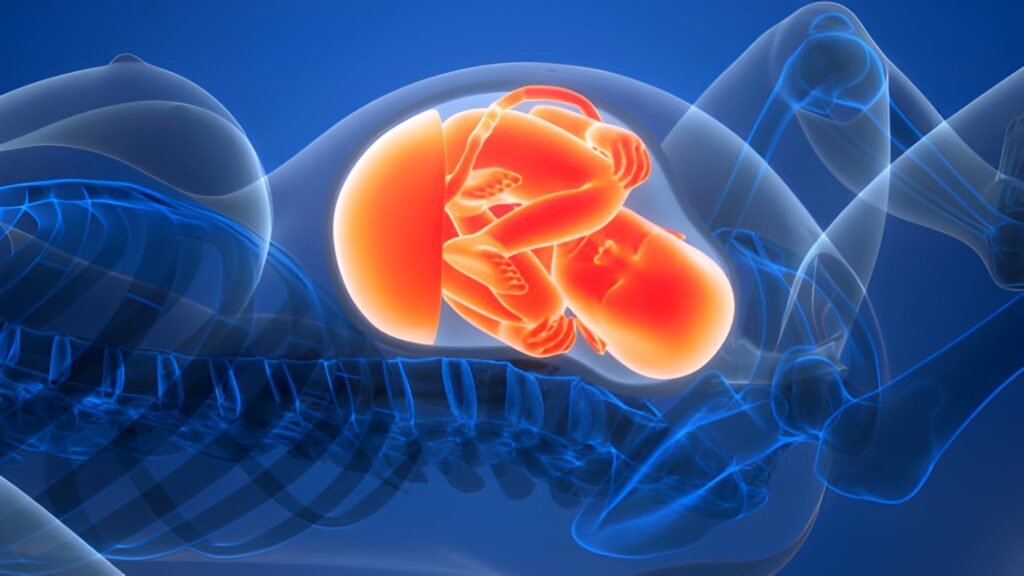
The Skeleton of a Newborn: A Journey of Fusion and Growth
Exploring the biological architecture of infants in
A human newborn enters the world with a skeletal structure that is vastly different from that of an adult. While most adults possess 206 bones, a newborn is born with approximately 270 to 300 bones. This higher count often surprises new parents and students of anatomy alike. The reason for this numerical discrepancy lies in the modular nature of the infant skeleton. At birth, many structures that will eventually become a single, solid bone exist as several separate pieces connected by flexible cartilage.
This biological design is not an accident or a mistake of evolution. Instead, it serves a dual purpose: it facilitates the passage through the birth canal and provides the extreme flexibility required for the rapid growth that occurs during the first few years of life. As a child matures, these separate pieces undergo a transition, merging together through a process of mineralization and fusion until the final adult tally is reached.
Modular Architecture
The extra bones in a newborn are primarily found in the skull, the spine, and the pelvis. For example, the sacrum (the bone at the base of the spine) consists of five separate vertebrae in a newborn, whereas in an adult, these have fused into a single triangular bone.
Cartilage: The Flexible Foundation
In the womb, the human skeleton starts not as hard bone, but as a scaffold of hyaline cartilage. This firm yet flexible tissue serves as the blueprint for nearly every bone in the body. By the time of birth, much of this cartilage has begun to turn into bone, but large portions remain soft. This is especially true at the ends of long bones and in the joints.
The presence of high amounts of cartilage allows the newborn to be incredibly resilient. If an infant had a fully ossified, rigid skeleton at birth, the physical stresses of delivery could lead to frequent fractures. Furthermore, cartilage provides the room for expansion. Because cartilage can grow faster than bone, it allows the limbs to lengthen rapidly during the "growth spurts" typical of infancy and toddlerhood.
Ossification: From Soft to Solid
The process of replacing cartilage with hard bone tissue is known as ossification. This begins in the center of the bone, in an area called the primary ossification center, and eventually spreads outward. Calcium and phosphate deposit onto the cartilage framework, hardening it into the durable substance we recognize as bone. This process continues long after birth, with some bones not finishing their ossification until a person reaches their early twenties.
Starts before birth in the shafts of long bones like the femur and humerus. It provides the initial structural strength a baby needs to support its own weight.
Occurs after birth, typically at the ends of the bones (epiphyses). This allows joints to develop properly while the bone continues to lengthen.
The Fusion Process Explained
As the child grows, the spaces between these separate bony segments close. The cartilage "bridges" are replaced by bone, and the separate pieces unite. This is why the total bone count decreases as a human ages. The most dramatic examples of this fusion occur in the axial skeleton, which includes the skull, vertebral column, and rib cage.
The Skull and Fontanelles
The most famous example of newborn bone modularity is the skull. An adult skull is a solid, protective casing, but a newborn's skull is comprised of several large plates that have not yet joined. The gaps between these plates are called fontanelles, often referred to as "soft spots."
These gaps serve two critical functions. First, they allow the skull plates to overlap slightly during birth, a process called "molding," which enables the head to pass through the birth canal without damaging the brain. Second, they allow the skull to expand rapidly to accommodate the explosive growth of the brain during the first year of life. The brain nearly triples in size by age three, a feat that would be impossible inside a rigid, pre-fused skull.
Growth Plates and Long-Term Development
Even after many of the initial fusions are complete, children still possess "extra" bone segments in the form of growth plates (epiphyseal plates). These are layers of active cartilage located near the ends of long bones. To a layperson looking at an X-ray of a child, the growth plates might look like "breaks" or gaps in the bone. In reality, these are the sites where new bone is being created.
When a person stops growing, usually in their late teens or early twenties, these plates finally ossify and "close." At this point, the epiphysis (the end of the bone) fuses with the diaphysis (the shaft), and the separate segments officially become one single bone. This marks the final step in the reduction of the bone count from the 300 found in newborns to the 206 found in adults.
Newborn vs. Adult Comparison
To visualize the scale of this skeletal transformation, it is helpful to look at the numbers side-by-side. The following grid illustrates the major differences in bone groups.
| Skeletal Region | Newborn State | Adult State |
|---|---|---|
| Skull | Multiple plates with fontanelles | Solid cranium with fused sutures |
| Spine (Lower) | Approx. 10 separate segments | 2 bones (Sacrum and Coccyx) |
| Pelvis | 3 distinct bones (Ilium, Ischium, Pubis) | 1 unified hip bone per side |
| Long Bones | Shafts separated from ends by cartilage | Continuous solid bone structure |
The Bone Reduction Calculation
If we take the average number of bones at birth and subtract the final count in adulthood, we can see the sheer volume of fusion that occurs during development.
Initial Count: 300 bones
Final Count: 206 bones
Difference: 94 fusions or losses
This indicates that nearly one-third of a newborn's initial skeletal segments will eventually merge with neighbors to create the stable, load-bearing system required for adult life.
Why the Count Varies
You may notice that some sources say a baby has 270 bones, while others say 300. This is because "bone" is sometimes a matter of definition in the neonatal stage. Some anatomists count every small ossification center as an individual bone, while others only count larger structures. Additionally, some humans are born with "accessory bones," such as extra ribs or small bones in the hands and feet, which can slightly shift the count for an individual.
Regardless of the exact number, the principle remains constant: the human body begins as a flexible, multi-part assembly and matures into a consolidated, resilient frame. This transition is one of the most remarkable examples of biological engineering in the animal kingdom, allowing a creature to go from a helpless infant to a high-performing bipedal adult in just two decades.
Understanding the skeletal development of a newborn provides more than just trivia; it offers insight into the importance of nutrition, especially calcium and Vitamin D, during the formative years. Because so much of the skeleton is still "active" and forming, the quality of a child's diet directly impacts the density and alignment of the bones they will carry for the rest of their lives. Protective care, proper positioning, and monitoring growth milestones are all ways we support this complex, internal merging of 300 pieces into a solid 206.