Medicine classifies a newborn weighing less than 1,000 grams (approximately 2 pounds, 3 ounces) as having Extremely Low Birth Weight (ELBW). These infants, often referred to as micro-preemies, represent the frontier of neonatal intensive care. Their survival depends upon a delicate balance of advanced technology and meticulous human intervention. While the physical scale of these babies appears small, the physiological challenges they face are immense. Every organ system remains in a state of arrested development, requiring the Neonatal Intensive Care Unit (NICU) to serve as an external womb for weeks or months.
Defining the ELBW Threshold
Clinicians distinguish between several categories of low birth weight to determine the level of risk and the necessary intensity of care. ELBW infants typically arrive before the 28th week of gestation. At this stage, the skin lacks a protective outer layer, the lungs possess no natural lubricant for expansion, and the digestive tract cannot yet process standard nutrients. The distinction in weight is not merely a number; it serves as a predictor for specific medical vulnerabilities.
| Category | Weight Threshold | Common Gestational Age |
|---|---|---|
| Low Birth Weight (LBW) | Under 2,500g (5.5 lbs) | 34 to 37 Weeks |
| Very Low Birth Weight (VLBW) | Under 1,500g (3.3 lbs) | 28 to 32 Weeks |
| Extremely Low Birth Weight (ELBW) | Under 1,000g (2.2 lbs) | Under 28 Weeks |
Respiratory Frontiers and Surfactant
The most immediate hurdle for an ELBW infant involves the transition to air breathing. In a full-term pregnancy, the lungs produce surfactant—a soapy substance that prevents the air sacs from collapsing—during the final trimester. An ELBW infant lacks this substance. Without it, the effort required to reopen the lungs with every breath leads to rapid exhaustion and respiratory failure. This condition, known as Respiratory Distress Syndrome (RDS), remains a primary concern in the first hours of life.
Mechanical Ventilation and CPAP
Neonatologists utilize several strategies to support these fragile lungs. Continuous Positive Airway Pressure (CPAP) provides a steady stream of air to keep the lungs open without invasive tubes when possible. If the infant cannot sustain their own breathing, mechanical ventilators take over. However, doctors must use extreme caution; the very pressure required to save the infant can also cause long-term scarring, a condition called Bronchopulmonary Dysplasia (BPD). Modern care focuses on the "gentle ventilation" approach to minimize this damage.
Protecting the Developing Brain
The brain of an ELBW infant is a landscape of rapid growth and extreme fragility. The blood vessels in a specific region called the germinal matrix are incredibly thin. Any sudden shift in blood pressure or oxygen levels can cause these vessels to rupture, leading to an Intraventricular Hemorrhage (IVH), or brain bleed. Protecting this neurological integrity is a cornerstone of NICU management.
The Metabolic Marathon: Nutrition
An ELBW infant requires high-calorie intake to mimic the rapid growth that should occur in the womb, yet their gut is often too immature to digest milk. Initially, they receive Total Parenteral Nutrition (TPN)—a liquid mix of fats, proteins, and sugars delivered directly into the bloodstream through a central line. This provides the building blocks for tissue repair and brain development while the digestive system matures.
The Importance of Liquid Gold
As soon as the infant stabilizes, neonatologists introduce "trophic feeds"—tiny drops of breast milk, often measured in fractions of a teaspoon. Breast milk acts as a medicine rather than just food. It contains bioactive factors that coat the gut lining, significantly reducing the risk of Necrotizing Enterocolitis (NEC), a life-threatening inflammation of the bowel that frequently affects ELBW infants.
Day 1 Target: 80ml to 100ml per kg of body weight.
Example for a 750g (0.75kg) infant:
0.75 * 90ml = 67.5ml total fluid for 24 hours.
Calculation: This equates to roughly 2.8ml per hour. Even a 1ml deviation can disrupt the electrolyte balance in such a small organism.
NICU Ecology and Development
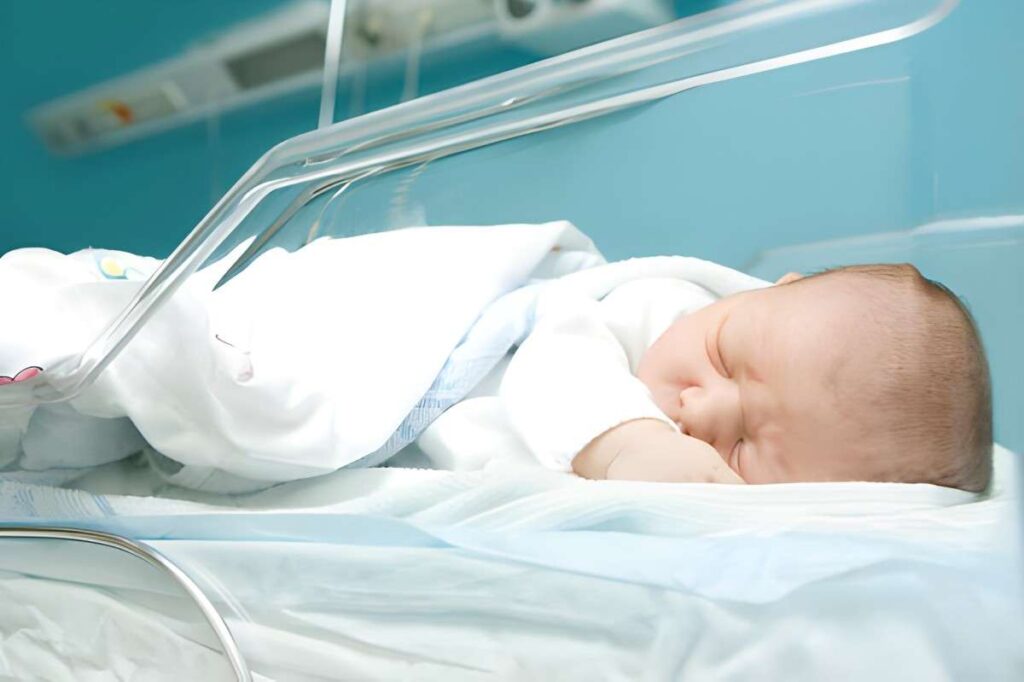
The NICU environment for an ELBW infant is a carefully controlled ecosystem. Because their skin is as thin as tissue paper, they reside in high-humidity isolettes. This moisture prevents dehydration and maintains body temperature. Light and sound levels are kept low to prevent sensory overload, which can negatively impact brain development.
Incubator/Isolette: A heated, humidified enclosure that provides a sterile environment and prevents heat loss.
Pulse Oximeter: A sensor on the foot or hand that monitors oxygen saturation in the blood in real-time.
Umbilical Catheter: A thin tube inserted into the umbilical cord vessels to draw blood and deliver fluids without repeated needle pokes.
Phototherapy Lights: Blue-spectrum lights used to treat jaundice, a common condition where the immature liver cannot process bilirubin.
The Economic and Emotional Landscape
In the United States, the birth of an ELBW infant carries significant socioeconomic implications. A typical NICU stay for a micro-preemie lasts between 80 and 120 days. The cost of this specialized care frequently exceeds 500,000 dollars, making it one of the most expensive medical events in the healthcare system. While insurance and programs like Medicaid often cover the bulk of medical costs, the indirect costs to families are profound.
Parents often face a "dual trauma": the fear for their child's life and the logistical strain of hospital life. Many families must navigate limited paid leave policies, childcare for older siblings, and the emotional toll of seeing their child through glass. Support systems, including social workers and parent-to-parent networks, are essential components of a comprehensive care plan. A stable home environment and parental mental health are strong predictors of a child’s long-term success after discharge.
Long-Term Horizons and Progress
The survival rates for ELBW infants have improved dramatically over the last three decades. In , an infant born at 26 weeks now has an 80% to 90% chance of survival in a level IV NICU. However, survival is only the first step. The goal of modern neonatology has shifted from "survival at all costs" to "intact survival"—ensuring the child can lead a high-quality life.
Long-term follow-up care is mandatory. ELBW children may face challenges with vision (Retinopathy of Prematurity), hearing, or fine motor skills. Early intervention programs, including physical and occupational therapy, help bridge the developmental gap. Many of these children go on to reach their full potential, proving that even the smallest start does not dictate a child's eventual destination.
A Collaborative Journey
Caring for an extremely low birth weight infant is perhaps the ultimate test of medical teamwork. It requires the synchronization of specialized nurses, respiratory therapists, nutritionists, and physicians. Most importantly, it requires the presence of the parents. Their touch, through Kangaroo Care (skin-to-skin contact), has been shown to stabilize heart rates and improve weight gain more effectively than technology alone. Through this combination of high-tech intervention and high-touch care, these small heroes continue to redefine the limits of human resilience.