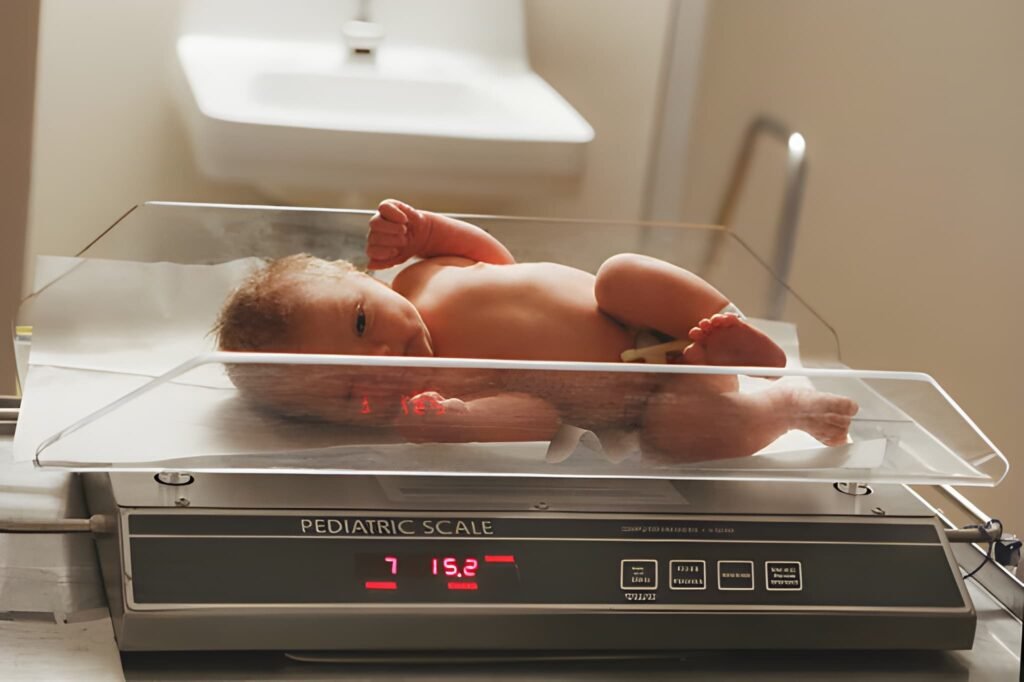
A newborn baby weighs approximately 7 pounds and 8 ounces on average in the United States, yet this single figure only scratches the surface of infant health. Birth weight serves as a critical biological baseline, providing healthcare providers with immediate insights into prenatal development and potential neonatal needs. While the average range spans from 5 pounds 8 ounces to 8 pounds 13 ounces, a significant portion of healthy infants fall outside these boundaries without cause for alarm. Understanding the nuances of these numbers requires a look at genetics, maternal health, and the unique physiological transitions that occur in the first weeks of life.
Healthy Birth Weight Ranges
Clinicians typically define a healthy birth weight for a full-term infant between the 10th and 90th percentiles on standardized growth charts. In the US, most full-term babies arrive between 37 and 40 weeks of gestation. An infant born at full term weighing less than 5 pounds 8 ounces is considered to have low birth weight, while one weighing more than 8 pounds 13 ounces is classified as having high birth weight, or fetal macrosomia.
It remains vital to distinguish between a baby who is small because of their genetic makeup and one who is small due to intrauterine growth restriction (IUGR). A genetically small baby is often perfectly healthy, meeting all developmental milestones, whereas a baby experiencing growth restriction may require specialized neonatal monitoring to ensure their organ systems have matured sufficiently to handle life outside the womb.
The First Week Weight Shift
One of the most surprising experiences for new parents is witnessing their newborn lose weight in the first few days of life. This is not a failure of nutrition; it is a standard physiological process. Newborns are born with excess fluid, and as they begin to breathe air and process nutrients, they shed this extra weight. A healthy, breastfed infant may lose up to 7% to 10% of their birth weight within the first 72 to 96 hours.
The return to birth weight is the first major growth milestone. Most healthcare providers expect to see an infant back at their starting weight by the two-week checkup. If an infant continues to lose weight after the fourth day, or fails to regain birth weight by the end of the second week, providers may investigate feeding efficiency, maternal milk supply, or underlying metabolic factors.
Primary Influencers of Birth Weight
Multiple variables converge to determine the number on the scale at birth. These range from the uncontrollable (gestational age) to the environmental (maternal nutrition). In a modern socioeconomic context, access to consistent prenatal care remains the single most impactful factor in ensuring a healthy birth weight.
The length of the pregnancy is the primary driver of weight. Infants gain the most weight during the final four weeks of gestation. Consequently, twins or triplets are almost always born at lower weights because they often arrive earlier and must share limited uterine space and nutrients.
Chronic conditions such as gestational diabetes often lead to higher birth weights (macrosomia) due to elevated glucose levels in the fetal bloodstream. Conversely, hypertension or smoking can restrict blood flow through the placenta, resulting in lower birth weights.
First-born children are statistically smaller than their subsequent siblings. Uterine and placental efficiency often improve with each pregnancy, allowing later-born children to achieve higher weights than the first child.
Classification: SGA vs. LGA
Pediatricians use specific terminology to categorize infants based on how their birth weight compares to other babies of the same gestational age. This helps prioritize medical attention for those at higher risk for complications like hypoglycemia (low blood sugar) or temperature regulation issues.
| Term | Full Name | Percentile Range | Common Risk |
|---|---|---|---|
| SGA | Small for Gestational Age | Below the 10th percentile | Heat loss, low blood sugar |
| AGA | Appropriate for Gestational Age | 10th to 90th percentile | Standard neonatal risks |
| LGA | Large for Gestational Age | Above the 90th percentile | Birth injury, respiratory distress |
Daily Intake Calculations
Once the infant begins their growth journey, nutrition becomes the engine. Parents often wonder if their baby is receiving "enough." While weight gain is the ultimate indicator, we can calculate estimated fluid requirements based on the infant's current weight. This ensures the baby remains hydrated and receives the calories necessary for rapid brain and tissue development.
Example for an 8-pound infant:
8 lbs * 2.5 oz = 20 ounces total per day.
Example for a 10-pound infant:
10 lbs * 2.5 oz = 25 ounces total per day.
Calculation Note: This total is typically divided into 8 to 12 feedings, resulting in approximately 2 to 3 ounces per feeding for a 10-pound baby.
Growth Milestones Year One
The first year of life is characterized by a growth velocity that will never be matched again in the human lifespan. A healthy infant is expected to double their birth weight by 5 to 6 months of age and triple it by their first birthday. This rapid expansion requires an immense amount of sleep and metabolic energy.
Monthly Weight Trajectories
During the first six months, infants gain an average of 5 to 7 ounces per week. From six months to one year, this rate slows slightly to about 3 to 5 ounces per week as the child becomes more mobile and begins incorporating solid foods into their diet. Pediatricians track this on a "curve"—it is the consistency of the growth along the infant's own established percentile that matters more than the specific number at any one visit.
Professional Monitoring Criteria
While most growth journeys are smooth, certain signs indicate a need for a professional evaluation. In the US, the term Failure to Thrive (FTT) is used when an infant's weight gain significantly deviates from their established curve. This is often a temporary issue related to feeding techniques, but it requires a methodical approach to resolve.
Consult your pediatrician if you observe the following:
- Infant has not regained birth weight by 3 weeks of age.
- Infant consistently falls below the 3rd percentile for weight.
- A sudden "drop" across two or more major percentile lines on a growth chart.
- Infant appears lethargic or refuses more than two consecutive feedings.
- Fewer than 6 heavy wet diapers in a 24-hour period after the first week.
The Journey Beyond the Scale
As we navigate through , modern pediatric care focuses on the whole child. While weight is a vital metric, it is only one piece of the developmental puzzle. A baby who is gaining weight slowly but is meeting all social, motor, and cognitive milestones is often doing just fine. The "perfect" birth weight is simply the one that allows your specific infant to begin their life safely. By understanding the factors that influence these numbers and the biological transitions of the first year, parents can move away from scale-anxiety and toward a confident, informed approach to their child’s growth.