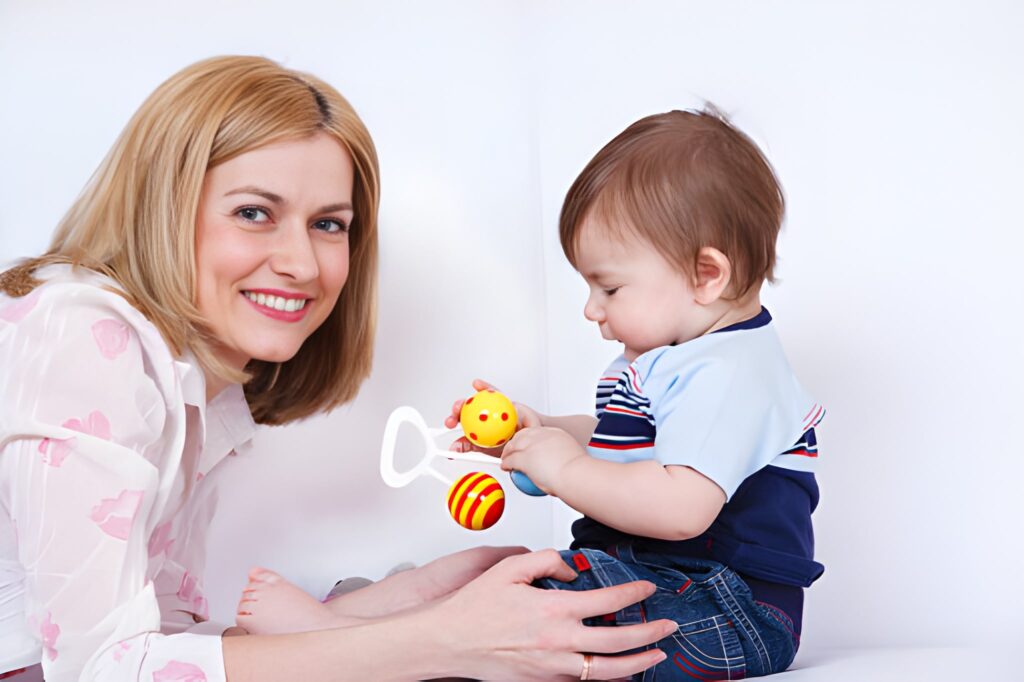
Child psychology is a field that explores the emotional, cognitive, social, and physical development of children from birth through adolescence. Research in this area provides essential insights into how children learn, interact, and adapt to their environment. Understanding the findings from foundational and contemporary studies allows parents, educators, and clinicians to support children effectively and make informed decisions about interventions, curricula, and parenting strategies. This article examines 20 pivotal studies in child psychology, detailing their methods, findings, and practical implications.
1. Ainsworth’s Strange Situation (1978) – Attachment Theory
Mary Ainsworth’s study introduced the “Strange Situation”, a controlled observational procedure designed to assess infant attachment patterns. The study involved observing how infants reacted when separated and reunited with their primary caregivers.
Findings:
- Secure attachment: Infants were distressed when separated but soothed upon reunion.
- Insecure-avoidant attachment: Infants avoided contact with caregivers.
- Insecure-ambivalent/resistant attachment: Infants showed intense distress but ambivalence on reunion.
Implications:
Secure attachment is associated with better emotional regulation and social competence in later childhood.
2. Bandura’s Bobo Doll Experiment (1961) – Social Learning Theory
Albert Bandura studied how children learn behaviors through observation. Children observed adults interacting aggressively or non-aggressively with a Bobo doll.
Findings:
- Children exposed to aggressive models were more likely to imitate aggression.
- Reinforcement and consequences influenced the likelihood of imitation.
Implications:
Observational learning plays a critical role in behavioral development, highlighting the importance of role models and media exposure.
3. Piaget’s Conservation Tasks (1954) – Cognitive Development
Jean Piaget examined how children understand the concept of quantity. He presented children with two identical containers of liquid; then, he poured one into a taller, thinner container and asked if the amounts were equal.
Findings:
- Children in the preoperational stage (ages 2–7) often believed the taller container had more liquid.
- Children in the concrete operational stage (ages 7–11) understood conservation of quantity.
Implications:
Children’s cognitive abilities develop in stages, influencing how they reason and solve problems.
4. Harlow’s Monkey Experiments (1958) – Attachment and Comfort
Harry Harlow studied infant rhesus monkeys separated from their mothers. Monkeys were given access to a wire mother that provided food and a cloth mother that provided comfort.
Findings:
- Infants preferred the cloth mother over the wire mother, even when food was provided by the wire mother.
- Emotional comfort and tactile stimulation were crucial for attachment.
Implications:
Attachment is not solely based on nutrition; emotional security is foundational for healthy development.
5. Erikson’s Psychosocial Stages of Development (1950) – Emotional and Social Growth
Erik Erikson proposed eight stages of psychosocial development. Each stage presents a conflict that must be resolved for healthy emotional growth.
Key Stage Examples:
- Trust vs. Mistrust (Infancy)
- Autonomy vs. Shame/Doubt (Toddlerhood)
- Initiative vs. Guilt (Preschool)
Implications:
Understanding these stages helps caregivers support age-appropriate challenges and promote positive identity formation.
6. Vygotsky’s Zone of Proximal Development (1978) – Social and Cognitive Development
Lev Vygotsky emphasized the role of social interaction in learning. The Zone of Proximal Development (ZPD) refers to tasks a child can complete with guidance but not alone.
Implications:
Scaffolding, mentorship, and collaborative learning optimize cognitive development, particularly in classroom settings.
7. Bowlby’s Maternal Deprivation Study (1951) – Attachment and Development
John Bowlby examined children who were separated from caregivers in early life due to hospitalization or institutionalization.
Findings:
- Maternal deprivation led to emotional disturbances, social difficulties, and cognitive delays.
Implications:
Early caregiver presence is critical for secure attachment and emotional stability.
8. Spitz’s Hospitalism Study (1945) – Institutionalization Effects
René Spitz studied infants in orphanages who were deprived of consistent caregiver interaction.
Findings:
- Children exhibited developmental delays, depression, and failure to thrive.
Implications:
Consistent caregiver interaction is essential for psychological and physical growth.
9. Gardner’s Multiple Intelligences (1983) – Cognitive Diversity
Howard Gardner proposed that intelligence is multi-faceted, encompassing linguistic, logical-mathematical, spatial, musical, bodily-kinesthetic, interpersonal, intrapersonal, and naturalistic intelligence.
Implications:
Educational approaches should be diversified to cater to varied strengths and learning styles.
10. Piaget’s Moral Development Study (1932) – Cognitive and Ethical Growth
Piaget explored how children develop moral reasoning through interactions with peers and adults. He presented scenarios where rules were broken accidentally or deliberately.
Findings:
- Younger children judged morality based on consequences (heteronomous morality).
- Older children considered intent and fairness (autonomous morality).
Implications:
Moral development evolves with cognitive growth, social interaction, and experience.
11. Werner’s Kauai Longitudinal Study (1955) – Resilience in Child Development
Werner followed 698 children born in Kauai, Hawaii, from birth to adulthood.
Findings:
- Despite high-risk conditions (poverty, family instability), many children demonstrated resilience.
- Protective factors included supportive adults, intelligence, and temperament.
Implications:
Resilience can be nurtured through supportive environments and positive relationships.
12. Bronfenbrenner’s Ecological Systems Theory (1979) – Environmental Influence
Urie Bronfenbrenner proposed that child development is influenced by nested environmental systems: microsystem, mesosystem, exosystem, macrosystem, and chronosystem.
Implications:
Child development cannot be understood in isolation; family, community, culture, and societal policies all play a role.
13. Thomas and Chess’ Temperament Study (1977) – Individual Differences
Alexander Thomas and Stella Chess identified three temperament types in infants: easy, difficult, and slow-to-warm-up.
Implications:
Temperament influences behavior, parenting approaches, and long-term adjustment. Matching parenting style to temperament supports optimal development.
14. Rosenhan’s Study on Labeling in Child Behavioral Psychology (1973) – Social Perception
Though primarily in adult psychiatry, Rosenhan’s work informs child psychology regarding the effects of labeling. Children labeled as “troubled” or “aggressive” may internalize these identities.
Implications:
Avoiding stigmatization and focusing on strengths encourages positive behavioral outcomes.
15. Mischel’s Marshmallow Test (1972) – Delayed Gratification
Walter Mischel examined self-control in preschoolers using the marshmallow test: children were given one treat immediately or two if they waited.
Findings:
- Children who delayed gratification had better academic achievement, social competence, and emotional regulation later in life.
Implications:
Self-regulation skills are predictive of long-term success and can be cultivated with guidance.
16. McDevitt and Ormrod’s Temperament and Classroom Learning (2002) – Education Psychology
Research shows that temperament significantly affects classroom behavior, peer relationships, and learning outcomes.
Implications:
Teachers can use flexible strategies to accommodate temperament differences and enhance engagement.
17. Patterson’s Coercion Model (1982) – Family Dynamics and Behavior Problems
Gerald Patterson studied how family interactions contribute to the development of antisocial behavior in children.
Findings:
- Negative reinforcement in parent-child interactions escalates problem behaviors.
Implications:
Parent management training and positive reinforcement strategies can mitigate behavioral issues.
18. Sameroff’s Transactional Model (1975) – Child-Environment Interaction
Michael Sameroff proposed that development results from continuous dynamic interactions between the child and environment.
Implications:
Interventions must consider the reciprocal influence of children and their social context to be effective.
19. Gopnik’s Theory of Mind Studies (1990s) – Cognitive Development
Alison Gopnik studied how children develop an understanding of other people’s beliefs, desires, and intentions.
Findings:
- Children as young as 4 can recognize false beliefs in others, indicating emerging theory of mind.
Implications:
Theory of mind is essential for social understanding, empathy, and cooperation.
20. Zelazo’s Executive Function Studies (2003) – Cognitive and Self-Regulation Skills
Philip Zelazo examined executive function, including working memory, cognitive flexibility, and inhibitory control, in preschool children.
Findings:
- Executive function predicts academic achievement, social competence, and adaptive behavior.
- Play-based interventions and structured activities enhance executive function.
Implications:
Early childhood programs focusing on self-regulation and executive skills improve long-term outcomes.
Comparative Overview of Key Child Psychology Studies
| Study | Focus Area | Key Findings | Practical Application |
|---|---|---|---|
| Ainsworth | Attachment | Secure vs. insecure attachment | Parenting strategies, therapy |
| Bandura | Social Learning | Behavior learned via observation | Media exposure, modeling |
| Piaget (Conservation) | Cognitive Development | Stage-specific reasoning | Curriculum design, problem-solving |
| Harlow | Attachment | Comfort > food | Foster care, caregiver bonding |
| Mischel | Self-Regulation | Delayed gratification predicts success | Early interventions, behavior training |
| Werner | Resilience | Protective factors mitigate risk | Policy, community support |
| Thomas & Chess | Temperament | Easy, difficult, slow-to-warm-up | Parenting, classroom management |
| Gopnik | Theory of Mind | False-belief understanding | Social skill development, empathy training |
Conclusion
These 20 studies in child psychology offer deep insights into attachment, cognitive growth, moral development, temperament, social learning, resilience, and self-regulation. They highlight the interplay between biological, social, and environmental factors in shaping child development. By applying these findings, caregivers, educators, and policymakers can design supportive environments, interventions, and learning opportunities that promote healthy growth and lifelong well-being for children.