Physical disabilities in early childhood can significantly influence the trajectory of development, affecting a child’s physical, cognitive, social, emotional, and language growth. While children with physical disabilities can thrive, understanding the unique challenges they face is essential for caregivers, educators, and healthcare professionals to provide appropriate support, interventions, and inclusive environments. Early identification, adaptive strategies, and consistent encouragement can promote optimal development despite physical limitations.
Understanding Physical Disabilities in Early Childhood
Physical disabilities encompass conditions that affect a child’s motor abilities, strength, coordination, mobility, or overall physical functioning. These may be congenital (present at birth) or acquired due to injury, illness, or medical conditions. Examples include cerebral palsy, muscular dystrophy, spina bifida, limb differences, or developmental delays affecting gross and fine motor skills.
Impact on Different Domains of Development
- Physical Development
Physical disabilities primarily affect gross and fine motor development. Children may experience:
- Delays in crawling, walking, or running
- Difficulty with balance and coordination
- Challenges with fine motor tasks such as grasping, drawing, or feeding
- Reduced participation in age-appropriate physical play
Support Strategies:
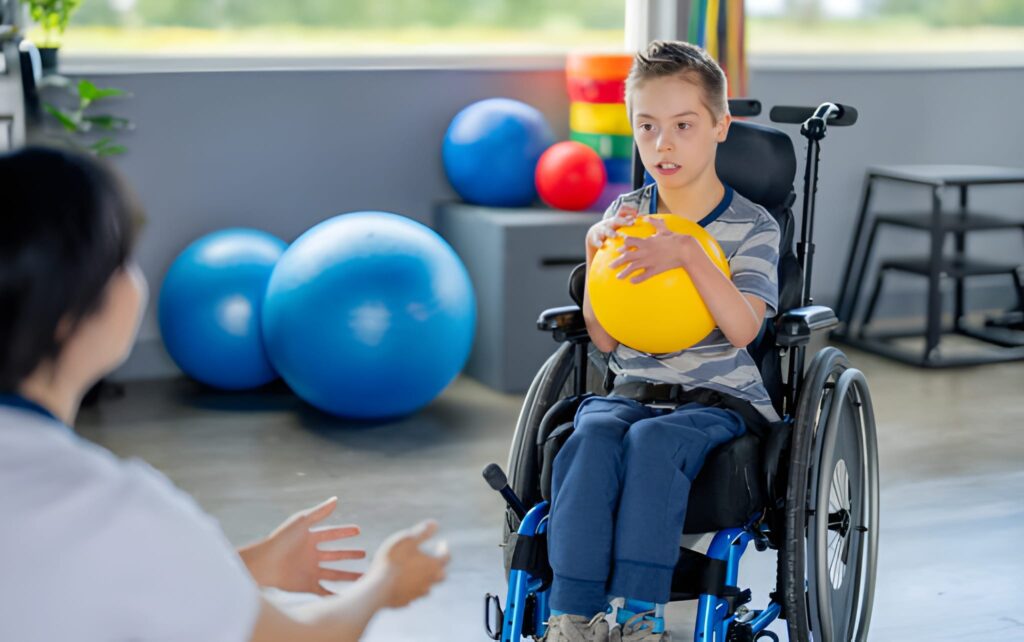
- Use adaptive equipment (walkers, braces, ergonomic utensils)
- Provide physical therapy to improve strength and mobility
- Encourage modified play that promotes movement within abilities
- Cognitive Development
While physical disabilities do not inherently limit cognition, reduced mobility or limited interaction with the environment can indirectly affect cognitive growth. For example:
- Limited exploration may reduce opportunities for problem-solving and sensory learning
- Fewer experiences with objects and surroundings may delay understanding cause-and-effect
Support Strategies:
- Provide accessible learning materials and sensory-rich environments
- Use interactive play that accommodates physical limitations
- Encourage participation in activities that stimulate curiosity and problem-solving
- Language and Communication Development
Physical disabilities can sometimes indirectly affect speech and language development if they involve oral-motor impairments or reduce social interaction. Challenges may include:
- Difficulty articulating words clearly
- Limited opportunities for social communication
- Dependence on alternative communication methods
Support Strategies:
- Introduce speech therapy when needed
- Use sign language, picture boards, or augmentative communication devices
- Promote frequent verbal interaction and responsive communication
- Social and Emotional Development
Children with physical disabilities may face challenges in socialization due to limited mobility or peer interactions, which can impact emotional growth. Potential effects include:
- Feelings of frustration or dependence
- Social isolation or difficulty joining group play
- Lower self-esteem due to physical limitations
Support Strategies:
- Facilitate inclusive play and peer interactions
- Encourage emotional expression and coping strategies
- Celebrate achievements to build confidence and self-esteem
Environmental and Caregiver Influences
The child’s environment and caregiver responses are critical in mitigating the impact of physical disabilities. Positive influences include:
- Access to early intervention programs and therapies
- Adaptive equipment and home modifications
- Supportive and responsive caregiving that encourages independence and exploration
- Inclusive educational settings that accommodate diverse abilities
Long-Term Implications
Early support can significantly improve developmental outcomes for children with physical disabilities. Children who receive timely interventions often achieve greater independence, social competence, and cognitive and language skills, allowing them to participate more fully in daily life and education.
Conclusion
Physical disabilities can influence early child development by creating challenges in motor skills, cognition, language, and social-emotional growth. However, with targeted support, adaptive strategies, inclusive environments, and responsive caregiving, children with physical disabilities can reach their full potential. Understanding the unique needs of each child and fostering opportunities for exploration, learning, and social interaction are key to promoting holistic development despite physical limitations.