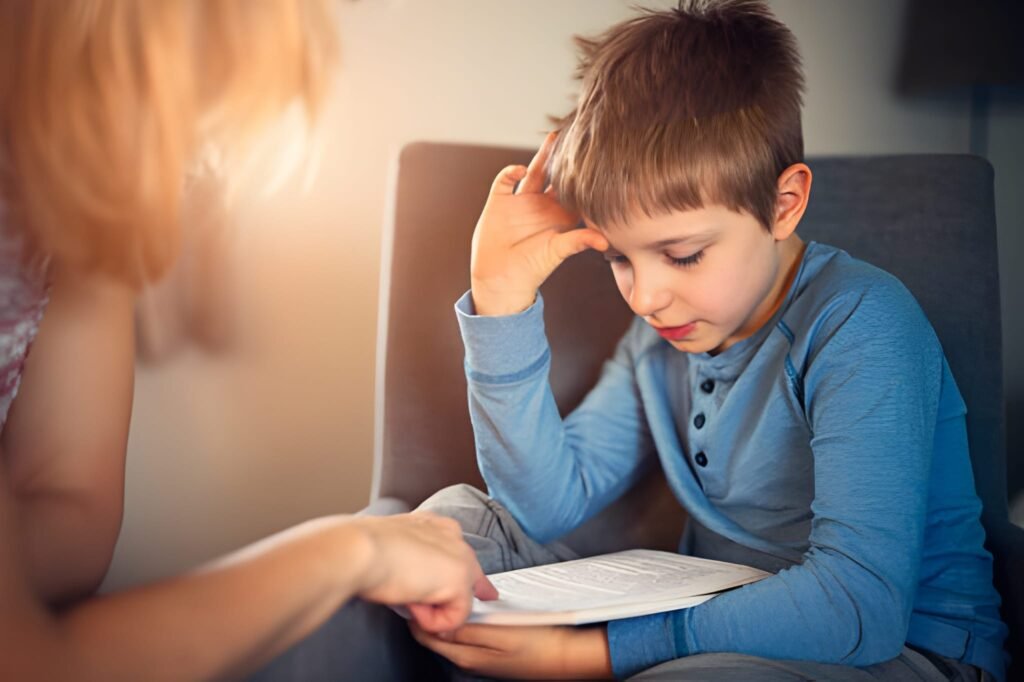
At eight years old, children are in a critical stage of middle childhood, marked by significant growth in cognitive abilities, emotional regulation, and social understanding. This period lays the foundation for academic achievement, self-concept, and peer relationships, making it essential for parents, educators, and psychologists to understand 8-year-old child psychology.
Cognitive Development: Eight-year-olds are firmly in Piaget’s concrete operational stage, where logical thinking about concrete situations becomes more reliable. They can perform mental operations such as classification, seriation, and understanding conservation of mass and volume. Problem-solving skills improve, and children begin to think methodically about cause and effect. Memory, attention, and reasoning abilities advance, supporting reading comprehension, mathematics, and project-based learning. Language skills are sophisticated; children can explain complex ideas, follow multi-step instructions, and engage in meaningful discussions.
Emotional Development: Emotional regulation continues to develop, and children at this age show greater self-awareness and empathy. They can identify their own emotions, as well as recognize and respond to others’ feelings. Self-esteem is closely tied to academic performance, social acceptance, and perceived competence. Eight-year-olds may experience anxiety or frustration in challenging situations, but with guidance, they begin to develop coping strategies and resilience. Understanding consequences, managing disappointment, and expressing emotions appropriately are key milestones.
Social Development: Peer relationships gain importance, and friendships are often based on trust, shared interests, and mutual respect. Children develop a clearer understanding of social norms, fairness, and teamwork. Conflicts may arise, but by eight, many children can negotiate solutions, take turns, and consider others’ perspectives. They begin to develop group identity and loyalty, often aligning with peer groups in preferences, behaviors, or interests.
Behavior and Communication: Behavior reflects growing independence, curiosity, and responsibility. Eight-year-olds can follow structured routines, complete tasks with minimal supervision, and engage in cooperative activities. Communication is advanced, including storytelling, reasoning, persuasion, and asking insightful questions. Imaginative play remains relevant, though more sophisticated, often incorporating social roles, moral dilemmas, or problem-solving scenarios.
Physical and Motor Development: Physical growth continues steadily, with refined gross and fine motor skills. Children can participate effectively in organized sports, dance, or other physical activities requiring coordination. Fine motor skills support writing, art, and manipulation of objects with precision. Physical activity contributes not only to physical health but also to cognitive function, social interaction, and emotional regulation.
Table 1: Key Developmental Milestones for an 8-Year-Old Child
| Domain | Typical Milestones | Examples |
|---|---|---|
| Cognitive | Logical thinking, problem-solving, classification, conservation | Solves math problems, sequences events, understands rules |
| Emotional | Greater empathy, emotional regulation, self-esteem development | Comforts peers, expresses frustration constructively, recognizes own emotions |
| Social | Cooperative play, understanding fairness, stronger peer bonds | Shares, negotiates, resolves conflicts, forms friendships |
| Communication | Complex sentences, reasoning, storytelling | Explains ideas clearly, debates, asks thoughtful questions |
| Physical | Refined motor skills, coordination | Participates in sports, writes neatly, balances and jumps accurately |
Psychological Implications: At eight years old, children are consolidating cognitive skills, emotional understanding, and social competencies. Supportive environments that balance challenge and encouragement help children develop self-confidence, resilience, and critical thinking. Peer interactions and collaborative learning play crucial roles in social development and moral understanding.
Support Strategies:
- Provide opportunities for problem-solving and hands-on learning to strengthen cognitive skills.
- Encourage emotional literacy and coping strategies to manage frustration and anxiety.
- Foster social skills through team activities, cooperative games, and guided peer interactions.
- Maintain structured routines while allowing autonomy in daily tasks.
- Promote physical activity to support motor development, concentration, and social engagement.
Understanding 8-year-old child psychology highlights the interplay of cognition, emotion, socialization, and physical growth. By providing a nurturing and stimulating environment, adults can help children thrive academically, socially, and emotionally, laying a foundation for continued development and lifelong well-being.