Physical education (PE) has long been viewed as a subject primarily concerned with developing motor skills, fitness, and overall health. While these remain critical goals, research and educational practice increasingly highlight that academic integration is also a primary outcome of physical education. This perspective recognizes that movement, exercise, and structured physical activities are not separate from academic learning but directly connected to cognitive development, academic performance, and holistic education.
Understanding Academic Integration in Physical Education
Academic integration refers to the process of linking physical activity and movement with academic content, skills, and competencies. Rather than seeing PE as isolated, educators use it as a platform to support literacy, numeracy, problem-solving, and social-emotional learning. Academic integration in PE acknowledges that physical activity stimulates brain function, enhances concentration, and fosters behaviors that translate into better learning outcomes across subjects.
For example:
- A game involving counting steps or calculating distances integrates mathematics into PE.
- Storytelling through movement incorporates language and literacy skills.
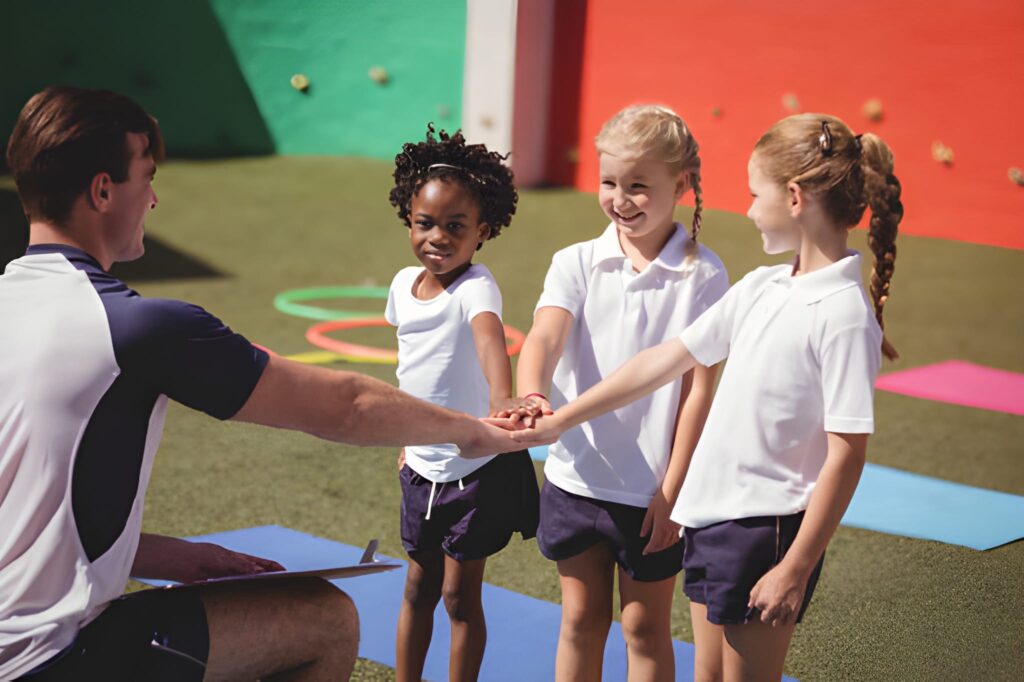
- Cooperative games enhance teamwork, which reinforces social studies concepts.
Why Academic Integration Matters in PE
- Cognitive Development – Physical activity increases blood flow and oxygen to the brain, boosting memory, attention, and problem-solving.
- Holistic Learning – Children learn more effectively when physical, emotional, and intellectual growth are interconnected.
- Motivation and Engagement – Linking physical activities with academics makes learning more interactive and enjoyable.
- Equity in Learning – PE provides opportunities for kinesthetic learners who may struggle in traditional classroom settings.
Research Evidence Supporting Academic Integration
Numerous studies have shown that physical education contributes directly to academic outcomes:
- Centers for Disease Control and Prevention (CDC) reports that physically active students tend to have higher grades and better classroom behavior.
- Ratey & Hagerman (2008) in Spark: The Revolutionary New Science of Exercise and the Brain found that exercise enhances brain plasticity, improving learning capacity.
- A meta-analysis by Sibley & Etnier (2003) demonstrated that physical activity positively correlates with academic achievement in children.
Table: Effects of Physical Education on Academic Skills
| Academic Area | Role of Physical Education | Evidence |
|---|---|---|
| Literacy | Story-based movement, vocabulary games | Improved reading comprehension |
| Numeracy | Counting steps, measuring distances, timing races | Better arithmetic performance |
| Science | Exploring body systems, nutrition, and health | Stronger understanding of biology concepts |
| Social Studies | Cooperative games, cultural dances | Greater awareness of teamwork and diversity |
Methods of Academic Integration in PE
1. Cross-Curricular Approaches
Teachers design PE lessons that reinforce concepts from other subjects. For example:
- Math: Calculating heart rates, graphing fitness results.
- Science: Understanding the muscular and circulatory systems through physical activity.
- Language Arts: Writing reflections on physical experiences.
2. Kinesthetic Learning Strategies
Physical activity is used as a medium for learning academic skills:
- Letter formation with body movements.
- Acting out historical events through role-play.
- Rhythm-based activities to enhance language and math fluency.
3. Social-Emotional Learning Integration
PE reinforces academic learning by strengthening soft skills like communication, leadership, and conflict resolution, which improve overall academic performance.
Global Perspectives
Different countries emphasize academic integration in PE in unique ways:
| Country | Academic Integration Example | Policy Influence |
|---|---|---|
| USA | SPARK PE program integrates health, fitness, and academic outcomes | CDC & ESSA recognition of PE’s role in academic success |
| Finland | Short physical activity breaks between lessons improve focus | National curriculum promotes holistic education |
| Japan | “Undō” (exercise) embedded in daily schooling | Strong cultural emphasis on discipline and concentration |
| Australia | Linking PE to literacy and numeracy strategies in primary schools | National Quality Framework for schools |
Benefits of Academic Integration in Physical Education
- Improved Academic Achievement – Active students score higher in standardized tests.
- Better Classroom Behavior – Movement reduces restlessness, improving attention spans.
- Increased Engagement – PE motivates students who may disengage in traditional academics.
- Life Skills Development – PE promotes problem-solving, goal-setting, and resilience.
Comparison Chart: Traditional PE vs. Academically Integrated PE
| Aspect | Traditional PE | Academically Integrated PE |
|---|---|---|
| Focus | Physical fitness and motor skills | Physical + cognitive development |
| Teaching Method | Drill-based, activity-centered | Cross-curricular, problem-solving oriented |
| Outcomes | Health, fitness, teamwork | Health + academic achievement + critical thinking |
| Engagement | Limited to sports enthusiasts | Broader appeal to all learners |
Challenges in Academic Integration
- Teacher Preparedness – Not all PE teachers are trained to integrate academic concepts.
- Curriculum Constraints – Some systems separate PE from academic subjects rigidly.
- Assessment Difficulties – Measuring academic gains through PE remains complex.
- Resource Gaps – Schools may lack facilities or tools to implement innovative programs.
Future Directions
- Policy Alignment – Education systems should recognize PE as integral to academic performance.
- Professional Development – Training teachers in cross-curricular pedagogy.
- Technology Integration – Using fitness trackers and apps to link data with math and science learning.
- Inclusive Models – Ensuring academic integration benefits all children, including those with disabilities.
Conclusion
Academic integration is not a secondary benefit but a primary outcome of physical education. By blending movement with cognitive and social learning, PE becomes a powerful contributor to overall academic success. Research confirms that active children not only stay healthier but also perform better in school, develop stronger problem-solving skills, and demonstrate higher engagement in learning. Recognizing the academic value of PE ensures that it holds its rightful place in the curriculum, not as a supplementary subject but as a central pillar of holistic education.