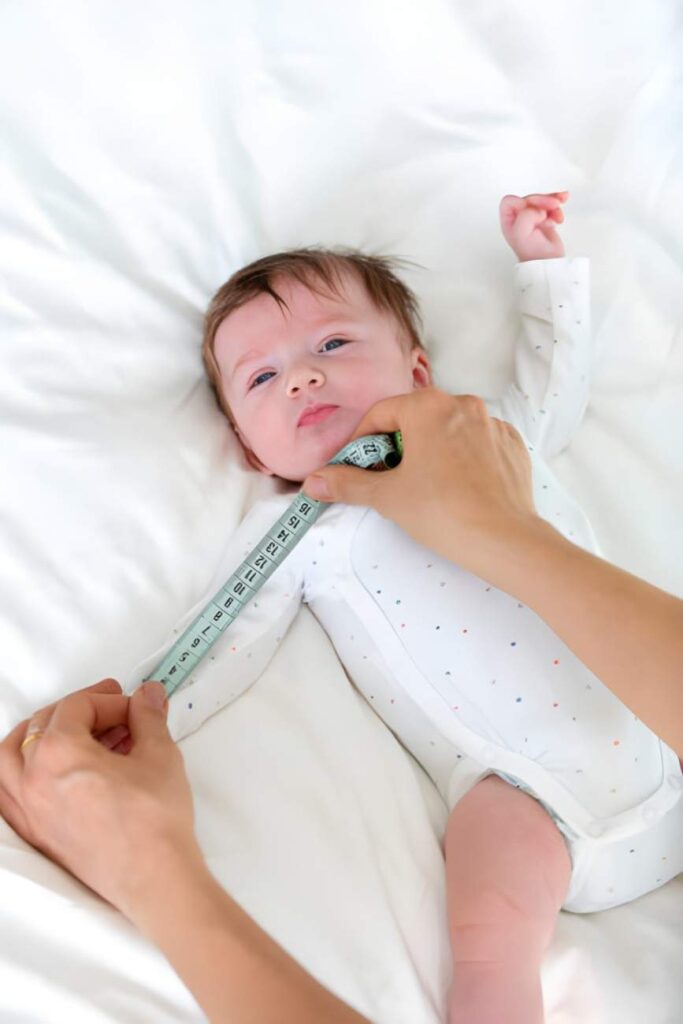
Measuring Minds: A Specialist’s Guide to Newborn Head Circumference
Understanding the 34 cm Baseline
At birth, one of the primary measurements recorded by the delivery team is the infant’s head circumference. If your newborn’s head measures exactly 34 centimeters, they sit in a very comfortable clinical space. As a specialist, I view this number as a healthy starting point for most full-term infants. While the average range for a newborn is typically cited between 33 and 35 centimeters, 34 centimeters represents a solid middle-ground measurement.
It is important to remember that a single measurement is less significant than the trend that follows. The human brain grows more rapidly during the first year of life than at any other time. The skull is uniquely designed to expand alongside this neural development. A 34 cm circumference at birth suggests that the structural foundation is well-proportioned for a term baby, providing ample room for the significant cognitive and motor development ahead.
The Science of OFC Measurement
Clinically, we refer to this measurement as the Occipital-Frontal Circumference (OFC). It is not a casual measurement. Pediatricians use a non-stretchable tape to find the largest possible distance around the head. This path typically goes from the most prominent part of the forehead (above the eyebrows) to the most prominent part of the back of the head (the occiput).
Consistency is the hallmark of good neonatal care. Ideally, the same type of measuring tape is used at every visit, and the results are plotted immediately on a standardized growth chart. This allows us to see if the 34 cm starting point evolves into a steady, predictable curve.
Cranial Anatomy: Sutures and Fontanelles
The newborn skull is not a solid bowl of bone. If it were, birth would be impossible and brain growth would be stifled. Instead, the skull consists of several plates of bone held together by strong, flexible tissues called sutures. Where these sutures meet, they form "soft spots" known as fontanelles.
| Anatomical Feature | Location | Closing Timeline | Clinical Function |
|---|---|---|---|
| Anterior Fontanelle | Top-front of the head | 12 to 18 Months | Allows for major brain expansion |
| Posterior Fontanelle | Back of the head | 2 to 3 Months | Assists in birth canal passage |
| Sutures | Across the skull plates | Early Adulthood | Flexible joints for growth |
When a doctor feels your baby’s head, they are checking these soft spots. A 34 cm head with open, flat fontanelles indicates that the internal pressure is normal and the brain has room to grow. A fontanelle that feels sunken might suggest dehydration, while one that feels persistently bulging could indicate increased pressure.
Percentiles and Growth Velocity
Where does 34 cm land on the charts? According to the World Health Organization (WHO) growth standards, for a term male infant, 34 cm is approximately the 15th to 20th percentile. For a term female infant, it is closer to the 25th to 30th percentile. This means the measurement is perfectly normal, as anything between the 3rd and 97th percentiles is considered within the healthy range.
We do not just look at the size; we look at the speed. In the first three months, the head should grow at a predictable rate:
Standard Growth = 2 centimeters per month
Logic Calculation: If your baby starts at 34 cm...
Month 1: 36 cm
Month 2: 38 cm
Month 3: 40 cm
By the end of the first year, the head circumference typically increases by a total of 12 centimeters from the birth measurement. This rapid velocity slows down significantly after age one.
Normal Variations: Molding and Bumps
It is very common for a newborn’s head to look asymmetrical or elongated immediately after birth. This is not a reflection of the brain’s shape, but rather the skull’s adaptability. During a vaginal delivery, the skull plates can actually overlap to fit through the narrow birth canal. This is called molding.
When Circumference Indicates Concern
While 34 cm is a healthy baseline, specialists watch for deviations from the established curve. We generally look for two specific conditions: Macrocephaly (a head that is too large) and Microcephaly (a head that is too small).
Macrocephaly
If the head circumference suddenly jumps across percentile lines (for example, moving from the 20th to the 90th percentile), we investigate. This might be "benign familial macrocephaly" (simply having a big head like a parent) or it could indicate hydrocephalus, where excess cerebrospinal fluid builds up in the brain.
Microcephaly
A head circumference that sits significantly below the 3rd percentile may indicate microcephaly. This can be caused by infections during pregnancy (like Zika or CMV), genetic conditions, or premature closure of the skull sutures (craniosynostosis). Early detection through these regular measurements allows for neurodevelopmental support to begin as soon as possible.
The Parent’s Role in Monitoring in
As we navigate infant health in the current year, technology and digital health records make it easier for parents to track their child’s progress. Most patient portals now allow you to see your child’s growth chart in real-time. Your primary role is to ensure consistency in your well-child visits.
Pediatricians measure the head at every visit until age two. If you have concerns about the shape of your baby’s head or if you notice they always prefer to look in one direction, mention it. These observations help us catch issues like torticollis (tight neck muscles) which can affect skull shape. A 34 cm head is a perfect start, but the narrative of your baby’s health is written in the weeks and months of steady growth that follow.