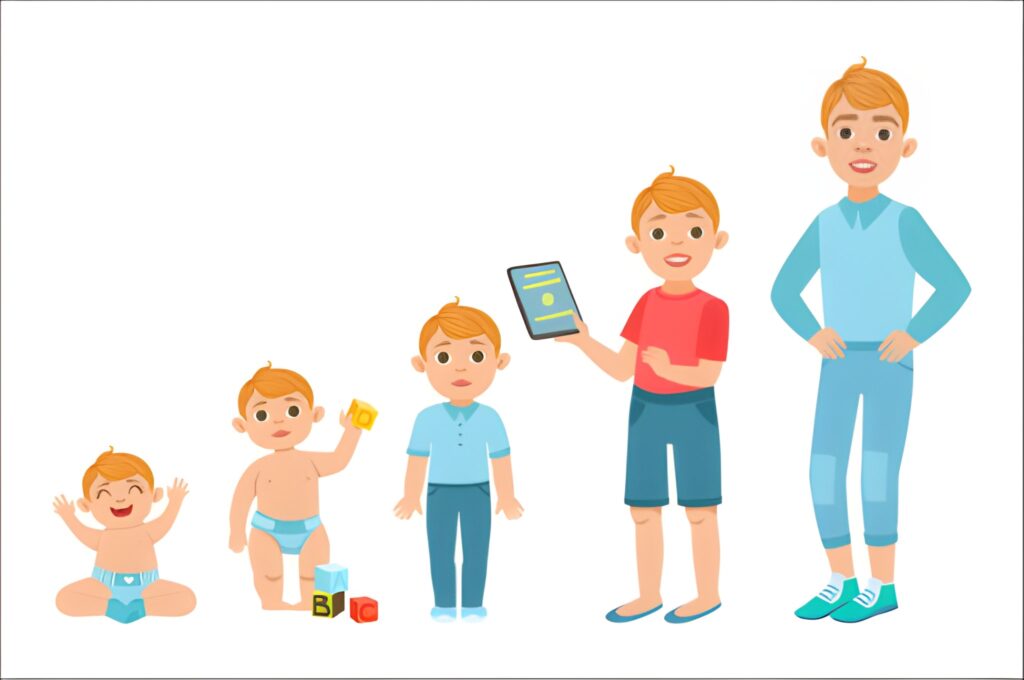
Child development is a dynamic, multi-dimensional process that encompasses physical, cognitive, emotional, social, and language growth. Understanding the progression from birth to young adulthood is essential for parents, educators, and healthcare providers. This comprehensive guide provides a detailed 0-19 years child development chart, highlighting key milestones, typical growth patterns, and developmental variations. It also considers socio-economic factors, cultural influences, and the latest research in developmental psychology.
Physical Development
Physical development involves growth in body size, strength, coordination, and motor skills. These milestones vary by individual but provide a general framework.
| Age Range | Average Height (US) | Average Weight (US) | Gross Motor Skills | Fine Motor Skills |
|---|---|---|---|---|
| 0-1 yr | 19-30 in | 7-22 lbs | Rolling, crawling, standing | Grasping, transferring objects |
| 1-2 yrs | 29-35 in | 20-32 lbs | Walking independently, climbing | Scribbling, stacking blocks |
| 2-3 yrs | 34-38 in | 26-38 lbs | Running, jumping, kicking | Turning pages, drawing shapes |
| 3-4 yrs | 37-41 in | 31-45 lbs | Balancing, hopping, throwing | Cutting with scissors, copying shapes |
| 4-5 yrs | 40-44 in | 36-50 lbs | Skipping, riding tricycle | Writing letters, buttoning clothes |
| 5-6 yrs | 43-48 in | 40-55 lbs | Improved coordination, riding bicycle | Drawing recognizable figures, basic writing |
| 6-7 yrs | 45-50 in | 45-60 lbs | Jump rope, balance beams | Cursive writing begins, precise cutting |
| 7-8 yrs | 47-52 in | 50-70 lbs | Team sports participation | Drawing with details, tying shoelaces |
| 8-9 yrs | 49-54 in | 55-75 lbs | Endurance increases, swimming | Typing, detailed art |
| 9-10 yrs | 51-56 in | 60-85 lbs | Complex sports skills | Neat handwriting, crafts |
| 10-11 yrs | 52-58 in | 65-90 lbs | Strength and stamina growth | Fine arts, musical instruments |
| 11-12 yrs | 53-60 in | 70-100 lbs | Pubertal changes begin | Complex fine motor activities |
| 12-13 yrs | 55-62 in | 75-105 lbs | Growth spurt, coordination peaks | Writing speed increases, art refinement |
| 13-14 yrs | 57-65 in | 80-115 lbs | Sports specialization | Technical drawing, musical skills |
| 14-15 yrs | 58-67 in | 85-125 lbs | Muscle mass increases | Advanced manual dexterity |
| 15-16 yrs | 60-69 in | 90-135 lbs | Strength training, endurance | Sophisticated art and crafts |
| 16-17 yrs | 61-70 in | 95-145 lbs | Peak athletic performance | Complex fine motor tasks |
| 17-18 yrs | 62-71 in | 100-150 lbs | Coordination stabilizes | Mature handwriting, technical skills |
| 18-19 yrs | 63-72 in | 105-160 lbs | Adult-level physical ability | Fully developed fine motor skills |
Physical development is influenced by genetics, nutrition, socioeconomic status, and access to physical activity. Children in higher-income environments may have earlier growth spurts due to better nutrition and healthcare, while those in resource-limited settings may show slower growth trends.
Cognitive Development
Cognitive development refers to intellectual growth, reasoning, problem-solving, and memory. Jean Piaget’s stages of cognitive development provide a framework for understanding these milestones.
| Age Range | Cognitive Stage | Key Abilities | Examples of Learning |
|---|---|---|---|
| 0-2 yrs | Sensorimotor | Object permanence, cause-effect | Recognizes familiar faces, explores objects by touching |
| 2-7 yrs | Preoperational | Symbolic thinking, egocentrism | Plays pretend, uses imagination, struggles with others’ perspectives |
| 7-11 yrs | Concrete Operational | Logical thinking, conservation | Understands numbers, time, and space, solves concrete problems |
| 12-19 yrs | Formal Operational | Abstract thinking, hypothetical reasoning | Solves complex problems, plans for the future, understands abstract concepts |
Cognitive growth is affected by environmental stimulation, parental engagement, quality of schooling, and socio-economic conditions. Children with access to early learning programs often display advanced problem-solving skills and language acquisition.
Language Development
Language acquisition follows a predictable trajectory from simple cooing to advanced syntax and vocabulary expansion.
| Age Range | Key Milestones | Typical Abilities |
|---|---|---|
| 0-6 months | Cooing, babbling | Recognizes parents’ voices, responds to sounds |
| 6-12 months | First words | Uses simple words like “mama” or “dada,” understands basic commands |
| 1-2 yrs | Vocabulary explosion | 50-200 words, simple two-word phrases |
| 2-3 yrs | Sentence formation | Combines three or more words, asks questions |
| 3-4 yrs | Complex sentences | Understands plurals, past tense, and prepositions |
| 4-5 yrs | Storytelling | Describes events, uses more sophisticated grammar |
| 5-7 yrs | Reading readiness | Recognizes letters, writes simple words |
| 7-9 yrs | Reading fluency | Reads age-appropriate texts, expands vocabulary |
| 9-12 yrs | Written expression | Writes paragraphs, uses grammar accurately |
| 12-15 yrs | Advanced vocabulary | Understands figurative language, abstract concepts |
| 15-19 yrs | Academic language mastery | Reads complex texts, writes essays and reports |
Language development can be influenced by exposure to conversation, reading habits, bilingualism, and socio-economic factors. Children in stimulating language environments generally achieve milestones earlier and develop richer vocabulary.
Emotional and Social Development
Emotional and social growth involves understanding oneself, forming relationships, and managing emotions. These abilities are shaped by family, peers, cultural norms, and societal expectations.
| Age Range | Emotional Milestones | Social Skills |
|---|---|---|
| 0-1 yr | Bonding, attachment | Smiles, recognizes caregivers |
| 1-2 yrs | Self-awareness | Shows independence, parallel play |
| 2-3 yrs | Empathy beginnings | Begins cooperative play, expresses emotions verbally |
| 3-5 yrs | Emotion regulation | Shares, takes turns, understands rules |
| 5-7 yrs | Peer relationships | Forms friendships, handles minor conflicts |
| 7-9 yrs | Emotional understanding | Recognizes others’ feelings, develops self-esteem |
| 9-12 yrs | Identity formation | Works in groups, develops moral reasoning |
| 12-15 yrs | Emotional complexity | Experiences mood swings, develops empathy, seeks peer approval |
| 15-19 yrs | Self-concept and independence | Establishes personal identity, plans for future, forms intimate relationships |
Socioeconomic context can influence emotional resilience, access to social opportunities, and coping strategies. Supportive home and school environments promote healthier social-emotional growth.
Summary of Key Milestones by Age
| Age | Physical | Cognitive | Language | Social/Emotional |
|---|---|---|---|---|
| 0-1 yr | Rolling, crawling | Object permanence | First words | Bonding with caregivers |
| 1-2 yrs | Walking, climbing | Cause-effect understanding | Simple phrases | Parallel play |
| 2-3 yrs | Running, jumping | Symbolic thinking | Two-word sentences | Cooperative play begins |
| 3-5 yrs | Skipping, balance | Preoperational reasoning | Complex sentences | Sharing, rule understanding |
| 5-7 yrs | Bicycling, coordination | Logical thinking | Reading readiness | Friendships, moral understanding |
| 7-12 yrs | Sports, strength | Concrete reasoning | Reading fluency | Group cooperation |
| 12-15 yrs | Growth spurt, coordination | Abstract thinking | Advanced vocabulary | Emotional complexity, peer focus |
| 15-19 yrs | Adult physical level | Formal operational thinking | Academic language | Identity, independence, intimate relationships |
Understanding the 0-19 years child development chart enables caregivers and professionals to support children holistically, identify potential delays early, and tailor interventions to enhance growth across all domains. Continuous observation, engagement, and fostering supportive environments contribute to optimal developmental outcomes.
This chart and guide provide a detailed roadmap from infancy to young adulthood, emphasizing that each child grows at their own pace while offering clear benchmarks for physical, cognitive, language, emotional, and social skills. It serves as a practical reference for parents, educators, and healthcare providers seeking a comprehensive view of child development.