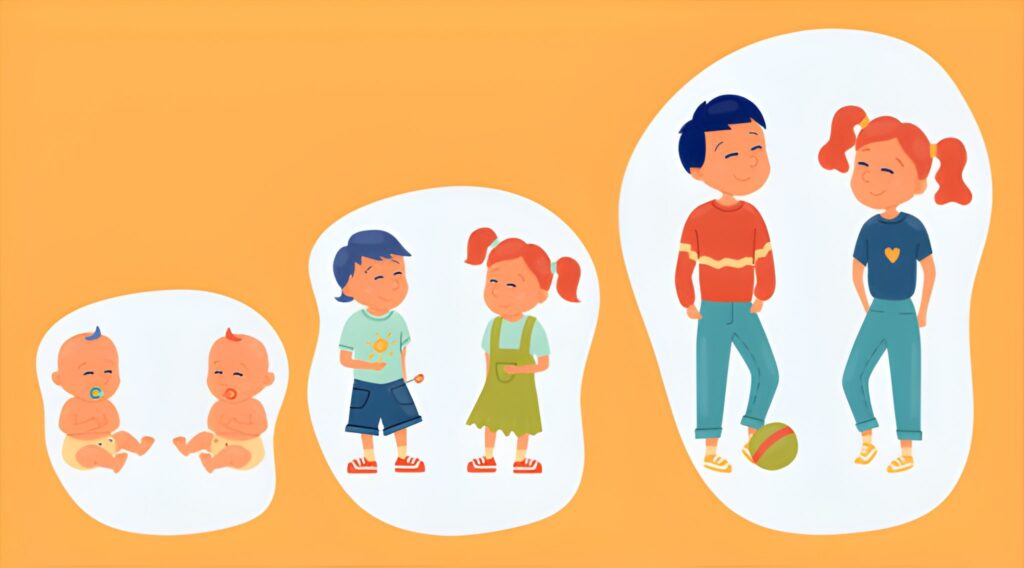
The first six years of life mark an extraordinary period of growth and transformation, setting the foundation for physical, cognitive, emotional, social, and language development. Children progress from fully dependent infants to independent, curious, and socially aware preschoolers ready to enter formal schooling. Understanding 0-6 years child development allows caregivers, educators, and parents to provide appropriate support, stimulation, and guidance. This guide explores developmental milestones, influencing factors, and strategies for nurturing holistic growth from birth to six years.
Physical Development (0-6 Years)
Physical growth during the first six years is rapid and highly visible. Children gain weight steadily, increase in height, and refine both gross and fine motor skills. By age six, most children have developed the coordination and strength to run, jump, climb, write, and manipulate objects with precision.
Motor Skill Milestones
| Age Range | Gross Motor Skills | Fine Motor Skills |
|---|---|---|
| 0-3 months | Lifts head briefly, pushes up during tummy time | Reflexive grasp, opens hands occasionally |
| 4-6 months | Rolls over, sits with support | Reaches for objects, transfers toys |
| 7-12 months | Sits independently, crawls, pulls to stand, may walk with support | Pincer grasp, points, manipulates objects |
| 13-18 months | Walks independently, climbs stairs with support | Scribbles, stacks 2-3 blocks |
| 19-24 months | Runs, kicks ball, climbs furniture | Turns pages, stacks 4-6 blocks |
| 25-36 months | Walks up stairs without support, jumps with both feet | Draws simple shapes, uses spoon/fork, begins dressing |
| 37-48 months | Hops, pedals tricycle, balances on one foot briefly | Copies shapes, uses scissors, dresses independently with help |
| 49-60 months | Runs smoothly, climbs ladders, throws/catches ball | Draws detailed shapes, writes letters, dresses independently |
| 61-72 months | Skips, balances on one foot for several seconds, throws/catches accurately | Writes words, copies complex shapes, dresses independently |
Cognitive Development (0-6 Years)
Cognitive growth encompasses thinking, reasoning, memory, problem-solving, and early academic skills. Children transition from reflexive learning to imaginative, logical, and symbolic thinking, preparing them for school readiness.
Table: Cognitive Milestones by Age
| Age Range | Cognitive Skills | Examples |
|---|---|---|
| 0-3 months | Alertness, attention, sensory exploration | Follows objects, recognizes caregiver |
| 4-6 months | Cause-effect understanding, exploration | Shakes rattle, experiments with sounds |
| 7-12 months | Object permanence, intentional actions | Searches for hidden toys, imitates gestures |
| 13-24 months | Early problem-solving, symbolic play | Stacks blocks, uses household objects for pretend play |
| 25-36 months | Sorting, categorization, early reasoning | Groups objects, uses imagination in play |
| 37-48 months | Imagination, memory, early logic | Solves puzzles, predicts outcomes |
| 49-60 months | Planning, sequencing, cause-effect reasoning | Engages in multi-step tasks, understands consequences |
| 61-72 months | Early literacy/numeracy concepts, problem-solving | Recognizes letters/numbers, counts objects, follows complex instructions |
Language Development (0-6 Years)
Language develops from cooing and babbling to forming complex sentences, asking questions, and storytelling. Receptive language often precedes expressive language.
| Age Range | Receptive Language | Expressive Language |
|---|---|---|
| 0-3 months | Responds to voices, calms when spoken to | Cooing, gurgling |
| 4-6 months | Recognizes familiar voices | Babbles with consonants |
| 7-12 months | Understands simple words | Says first words, imitates sounds |
| 13-18 months | Follows simple instructions | Vocabulary 10-50 words, two-word phrases |
| 19-24 months | Understands simple stories | Vocabulary 50-200 words, simple sentences |
| 25-36 months | Follows multi-step instructions | 3-4 word sentences, uses pronouns |
| 37-48 months | Understands stories/explanations | Forms complex sentences, uses past tense |
| 49-60 months | Follows detailed instructions, asks questions | Uses full sentences, tells stories, engages in conversation |
| 61-72 months | Understands abstract concepts, engages in discussion | Asks “why” and “how,” explains ideas, early reading/writing attempts |
Social and Emotional Development (0-6 Years)
Social-emotional development moves from forming attachments to understanding emotions, empathy, and cooperative play. By six, children demonstrate self-regulation, empathy, and the ability to navigate social rules.
| Age Range | Social Development | Emotional Development |
|---|---|---|
| 0-3 months | Recognizes caregivers, social smiles | Expresses discomfort/contentment |
| 4-6 months | Engages in interactive play | Shows excitement, pleasure, distress |
| 7-12 months | Forms attachment, stranger anxiety | Self-soothing, expresses joy/frustration |
| 13-24 months | Parallel play, tests boundaries | Pride, embarrassment, frustration |
| 25-36 months | Cooperative play, simple negotiation | Recognizes emotions, begins empathy |
| 37-48 months | Group play, imaginative roles | Understands social rules, self-control |
| 49-60 months | Participates in group activities, resolves conflicts | Demonstrates empathy, manages impulses, negotiates |
| 61-72 months | Engages in structured group play, teamwork | Demonstrates responsibility, emotional understanding, adjusts behavior to context |
Sensory Development (0-6 Years)
Children explore the world through their senses, which supports cognitive and emotional growth. Sensory integration improves gradually, enabling better coordination and problem-solving.
| Sense | Development | Examples |
|---|---|---|
| Vision | Focus, depth perception, color recognition | Tracks objects, recognizes faces, distinguishes colors |
| Hearing | Differentiates pitch/tone | Responds to voices, enjoys music, follows verbal instructions |
| Touch | Explores textures, hand-eye coordination | Grasps objects, manipulates toys, draws |
| Taste & Smell | Recognizes flavors and familiar scents | Shows preferences, reacts to new foods |
Factors Influencing Development
Child development is influenced by genetics, environment, nutrition, caregiving quality, and socioeconomic factors. Secure attachment, enriched environments, consistent caregiving, and access to healthcare support optimal growth. Early intervention can mitigate delays caused by poverty, malnutrition, or limited stimulation.
Practical Strategies for Supporting Development
Provide safe spaces and encourage active play for motor skills. Promote exploration, problem-solving, and imaginative activities for cognitive growth. Engage in conversation, reading, singing, and storytelling to enhance language. Encourage cooperative play, model empathy, and support emotional regulation. Introduce varied sensory experiences. Ensure balanced nutrition and sufficient sleep.
Conclusion
The first six years of life are foundational for lifelong learning, emotional resilience, and social competence. Children progress from dependent infants to independent, socially aware preschoolers. Understanding milestones across physical, cognitive, language, social-emotional, and sensory domains helps caregivers provide optimal support. Responsive caregiving, enriched experiences, safe exploration, and age-appropriate activities empower children to reach their full potential as they transition into formal education.